
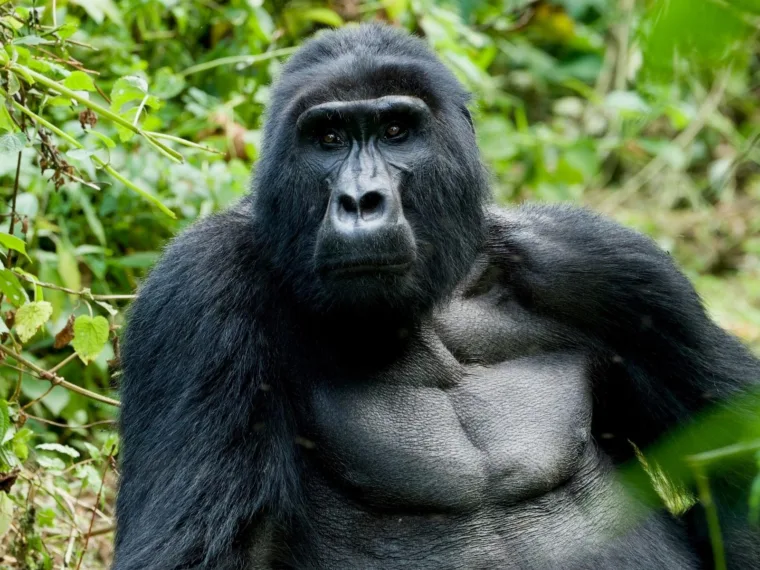
Uganda Gorilla & White-Water Expedition
Spend an hour with wild mountain gorillas, then raft the grade 5 White Nile.
From £4,359
£871.80 deposit to reserve, payment plans available

Eleven days across Ecuador, from snorkelling with penguins, sharks and marine iguanas in the Galápagos to canyoning and white water rafting in the Amazon headwaters, finishing in the colonial heart of Quito.
Very few countries pack this much into one journey. Ecuador is small enough to cross in a morning and varied enough to hold the Pacific, the Andes and the Amazon all at once, and this expedition takes in all three.
We start in the Galápagos, a thousand kilometres out in the Pacific, where the wildlife has never learned to be afraid of people. Giant tortoises in the highlands, marine iguanas piled on black lava, sea lions that will not move off the path, blue footed boobies, frigate birds, and in the water penguins, rays, turtles and white tipped reef sharks. This is the archipelago that gave Darwin his idea, and it remains one of the great wildlife places on earth.
Then we fly back across the mountains and drop into the Amazon basin at Tena, where the rivers come off the Andes fast and cold. There is canyoning down the Rio Blanco, white water rafting on the Jatunyacu, which means big water in Quechua and lives up to it, and a guided walk into rainforest that holds a tenth of all known species on the planet.
We finish in Quito, at 2,850 metres, whose old town is one of the best preserved colonial centres in the Americas and was among the very first UNESCO World Heritage Sites ever declared.
No previous experience is needed for any of it.
You arrive into Quito and transfer to our hotel beside the airport, which is deliberately chosen because tomorrow starts early with the flight out to the Galápagos.
Quito sits at 2,850 metres, which is high enough that most people notice it after a long flight. Take it easy tonight, drink more water than you think you need, go steady on anything alcoholic and get an early night. You will feel the difference tomorrow.
This evening is about meeting the group, going through the plan and getting your kit sorted for eleven days that will take you from the equatorial Pacific to the Amazon basin.
An early flight west across the Pacific to Baltra, the small island airport that serves Santa Cruz. Arrival formalities in the Galápagos take a while and are worth it, because everything that lands here is checked to protect one of the most carefully guarded ecosystems on the planet.
We cross Santa Cruz to Puerto Ayora, and the drive is the first proper introduction. We stop in the misty green highlands at a reserve where giant tortoises live entirely wild, moving through the grass at their own unhurried pace, and walk through a lava tunnel, which is exactly what it sounds like and considerably bigger than you expect.
After checking in we visit the Charles Darwin Foundation, the research station and breeding centre that has done more than anything else to pull several tortoise species back from the edge.
Later we walk out to Tortuga Bay, a long white beach with sea lions asleep on it and marine iguanas basking on the rocks. Dinner tonight is your own, and there is a very good choice of restaurants a short walk from the hotel.
A full day by boat out to one of the uninhabited islands. Which one depends on conditions and permits on the day, and each is genuinely different.
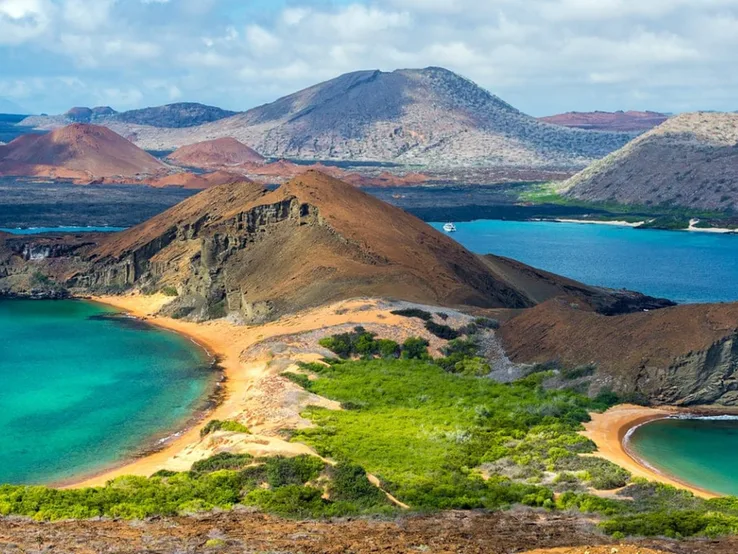
Santa Fé and South Plaza are the places for endemic land iguanas, big yellow things sitting under prickly pear cactus looking prehistoric. Bartolomé is the lava landscape everyone has seen in photographs, with Pinnacle Rock and views across a volcanic moonscape. North Seymour is the seabird island, with frigate birds inflating their scarlet throat pouches and blue footed boobies doing their extraordinary courtship dance more or less underfoot.
Whatever the island, there is snorkelling in clear water, a naturalist guide who knows exactly what you are looking at, and the constant slightly unnerving experience of wildlife that does not move away from you.
Breakfast and lunch are provided today.
A very early start, at the port for six, for the speed boat crossing to Isabela, arriving around half past nine. Be warned that this crossing can be rough and it is the one part of the trip where seasickness tablets genuinely earn their place.
Isabela is the biggest island in the archipelago and the least developed, and Puerto Villamil is a sleepy sand street town that feels a world away from Santa Cruz. We drop bags at the hotel and head straight out in kayaks to the Tintoreras, a maze of jagged black lava islets just offshore.
This is one of the great wildlife stops in the Galápagos. Colonies of Galápagos penguins, the only penguins that live on the equator. Marine iguanas in heaps on the rock and swimming beneath you with their tails whipping. White tipped reef sharks resting in the channels. Sea turtles, rays and sea lions. We walk across the lava platforms and snorkel in the channels before heading back for lunch.
In the afternoon we visit the tortoise breeding centre, the wetlands and the flamingo lagoon. Breakfast and lunch are provided today.
We leave at half past seven for Los Tuneles at Cabo Rosa, which is the site that most guests end up naming as their favourite day of the whole trip.
Centuries of lava flows running into the sea have collapsed into a maze of arches, bridges and tunnels in shallow turquoise water. Above the surface you walk across the formations looking for blue footed boobies nesting on the rock. Below it you snorkel through the tunnels themselves, where white tipped reef sharks lie stacked up in the shade, sea turtles cruise past at arm's length, and there is a large colony of Galápagos penguins alongside a great deal of other sea life.
It is calm, shallow, sheltered water and it suits nervous snorkellers particularly well, which makes the quality of what you see all the more remarkable.
Breakfast and lunch are provided today.
This morning we head up to the Sierra Negra volcano, which has the second largest volcanic crater in the world and sits in one of the most active parts of the Galápagos. Its most recent eruption was in 2018.
The walk up is straightforward and the reward is enormous. The caldera is around ten kilometres across, a vast black bowl of solidified lava that simply keeps going, often with cloud pouring over the far rim. It is a completely different Galápagos from the beaches and the wildlife, and it is a useful reminder that these islands are volcanoes that happened to grow things.
In the early afternoon we take the boat back across to Santa Cruz and check into the hotel. The rest of the afternoon and the evening are free to explore Puerto Ayora, wander the fish market where pelicans and sea lions queue with the customers, and eat somewhere good.
Breakfast and lunch are provided today.
A long travel day, and a dramatic change of world.
After breakfast we transfer across Santa Cruz to Baltra airport and fly back to Quito. From there we drive east and drop down off the Andes into the Amazon basin, following the road as the air thickens, the temperature climbs and the vegetation closes in around you.
Tena sits on the Napo river in the upper Amazon, a friendly town that is the whitewater capital of Ecuador and the gateway to a huge amount of rainforest. Within a single day you go from black lava and Pacific seabirds to green heat, cicadas and rivers running fast off the mountains.
Breakfast is provided today. We arrive in the evening and get an early night.
A gentle morning in Tena to recover from yesterday's travelling, then a short drive out to the Rio Blanco for the afternoon.
Canyoning is one of those activities that sounds alarming and turns out to be enormous fun. You work your way down a river canyon in the rainforest by abseiling down waterfalls, sliding down water polished rock chutes and jumping into pools, all in a harness and helmet with guides on the ropes. This is a grade three, moderate level canyon, which is challenging enough to feel like an achievement and gentle enough that no previous experience is needed.
The setting is the point. Green walls closing overhead, water everywhere, and a genuine sense of being deep inside something.
Breakfast and lunch are provided today.
The Upper Rio Napo is also known as the Rio Jatunyacu, which means big water in Quechua, and big is the right word for it.
This is one of the best rafting rivers in South America for exactly the reason that it suits everybody. There are proper rapids with big, forgiving waves that soak everyone in the boat, long calm stretches where you can drift and swim, and rainforest running down to the water on both sides the entire way. Kingfishers, herons and the occasional pair of macaws overhead.
You need no previous experience. The guides run the safety briefing, teach you the paddle commands and put a very experienced person on the back of every boat, and there is a safety kayaker on the water throughout.
It is a big, loud, laughing sort of day and most groups come off the river high as kites. Breakfast and lunch are provided today.
This morning we take a guided walk into the rainforest to learn how the whole thing actually works: the layers, the medicinal plants, the leafcutter ant highways, the way the forest recycles everything almost instantly. Our guides grew up here, and an hour with somebody who knows what they are looking at will change how you see the place. We also visit a waterfall.
There is the option to visit a rescue centre in Tena that houses a range of rescued native species, many of them confiscated from the illegal pet trade, before we make the drive back up out of the basin to Quito.
The road climb is a spectacle in itself, out of the humidity and up through cloud forest to the Andean plateau. Remember that Quito sits at 2,850 metres, so take it gently when you arrive after a fortnight closer to sea level.
Breakfast is provided today.
Our final morning is spent in Quito, properly San Francisco de Quito, the capital and largest city of Ecuador and, at 2,850 metres, the second highest official capital in the world. It sits on the eastern slopes of the Pichincha volcano, which is visible from most of the city.
The historic centre is the reason we finish here. It is one of the largest, least altered and best preserved colonial centres anywhere in the Americas, and it was among the very first sites on the UNESCO World Heritage list when it was created in 1978. Plazas, churches loaded with gold leaf, balconied streets and a working city going on around all of it.
After the tour we transfer to the airport for your flight home. Breakfast is provided today.
You will leave having snorkelled with sharks on the equator, walked among wild giant tortoises, rafted an Amazon headwater and stood in one of the oldest cities in South America, all inside eleven days.
It is graded Easy, the first of our four grades. That is 11 days of it, so being ready matters more than being fast. The highest point is about 2,850m, so altitude is part of what makes it hard. If you are unsure whether it suits you, talk to us before you book rather than after: we would far rather move you to the right adventure than watch you struggle on the wrong one.
Every trip runs with qualified leaders, a risk assessment written for the route, emergency procedures and communications planned before departure, and local support on the ground. Travel insurance covering your chosen activities is a condition of booking.
The expedition begins and ends at Quito airport in Ecuador. International flights are not included. From the UK most routings connect through Madrid, Amsterdam, or a US hub, and journey times are long. Book to arrive on Day 1 and depart on Day 11 after the city tour, allowing for the fact that Quito airport is a considerable drive from the city. The flights between Quito and the Galápagos are included and we book those for the group.
Most nationalities, including British citizens, do not need a visa for short tourist stays in Ecuador. Your passport should have at least six months validity beyond your travel dates. A yellow fever certificate may be required depending on your routing and where you have travelled before. Requirements change, so confirm against official guidance for your own nationality close to departure.
Two charges are payable locally, in cash, in US dollars, and are not included in the trip price: the INGALA transit control card, bought at the mainland airport before you fly, and the Galápagos National Park entrance fee, paid on arrival at Baltra. Both are set by the Ecuadorian authorities and the amounts are subject to change, so we will confirm the current figures before departure. Bring clean, undamaged notes. Baggage is inspected for organic material, so do not carry fruit, seeds or plants.
Comprehensive travel insurance is mandatory. It must cover white water rafting and canyoning, both of which are excluded by many standard policies or offered only as a paid add on, as well as kayaking, snorkelling and boat excursions. Medical evacuation cover matters here too, since the Galápagos is a thousand kilometres offshore and serious cases are flown to the mainland. Check the activity list rather than assuming.
This expedition is graded Easy, the first of our four grades, and no previous experience is required for any activity. That said, it is active rather than restful. Expect a good deal of boat travel, snorkelling in open water, kayaking, an easy paced volcano hike, a walk in humid rainforest, a grade three canyon descent and a full day of white water rafting. You should be able to swim and be reasonably comfortable in water. If you are a nervous swimmer, which is common and easily planned around, please note it in your guest portal.
Quito sits at 2,850 metres and is the second highest capital city in the world. You will feel it on arrival and again on the last two days, especially coming back up from the Amazon after a week close to sea level. It is mild and most people notice only tiredness and stronger effects from alcohol, but take the first evening gently, drink plenty of water and do not plan anything strenuous on arrival.
You are on the equator, so the sun is directly overhead and fierce, including through cloud. The Galápagos is warm and breezy with cooler sea temperatures than the latitude suggests, because of the Humboldt current, which is why a rash vest or wetsuit is welcome when snorkelling. The Amazon is hot and very humid with rain possible at any time. Quito is temperate and noticeably cool in the evenings at altitude. Pack for all three.
Breakfast is included every day and lunch is included on the activity days, exactly as set out in the day by day itinerary. Evening meals are not included on any night. This is deliberate: Puerto Ayora in particular has an excellent choice of restaurants within a short walk of the hotel, and it lets you eat what you like at your own pace. Please budget for it and carry cash. Dietary requirements can be accommodated; please add them to your guest portal well before departure.
Ecuador uses the US dollar, which makes life simple. Bring cash in clean, undamaged notes including plenty of small denominations, since torn or heavily worn notes are often refused and change for large notes can be hard to find. Card acceptance is reasonable in Quito and Puerto Ayora and patchy on Isabela, so draw what you need before crossing. The park fee and transit card must be paid in cash. Tips for the in country team, guides and drivers are not included and are customary.
The Galápagos is a national park and a UNESCO World Heritage Site with strict conduct rules, and they are the reason the wildlife behaves as it does. Keep the required distance from every animal, never touch or feed anything, no flash photography, stay on marked trails, take nothing away and leave nothing behind. Visitor sites are accessed with a licensed naturalist guide and their instructions are not optional. Use reef safe sun cream.
The Galápagos is one of the few places on earth where wildlife sightings are close to reliable. Expect sea lions, marine iguanas, giant tortoises, Darwin's finches, mockingbirds and frigate birds, and very likely blue footed boobies, penguins, white tipped reef sharks, sea turtles and rays. Which uninhabited island the Day 3 tour visits depends on conditions and permits and is decided locally. In the Amazon, wildlife is heard far more than seen, which is the nature of rainforest.
The speed boat between Santa Cruz and Isabela takes around two and a half hours and can be genuinely rough, and you do it in both directions. If you are at all prone to motion sickness, bring tablets or bands and take them before boarding rather than once you feel unwell. Sit low and central in the boat, keep your eyes on the horizon, and say something early rather than late.
Both are run by experienced local operators with full equipment, safety briefings and guides throughout, and both are suitable for beginners. The canyon is graded three, described as moderate, and involves abseiling, sliding and jumping into pools. The rafting is on the upper Rio Napo with big, forgiving waves and calm pools between. On either day you may decline any individual section without any fuss. River levels rise quickly after heavy rain and the operator's decision on whether to run is final.
See a travel clinic well before departure to discuss the Amazon region specifically. Yellow fever vaccination is commonly recommended for the lowlands and hepatitis A and typhoid are usually advised. Dengue is present and has no traveller vaccine, so use repellent, cover your skin at dawn and dusk and keep rooms screened. Whether to take antimalarials is a decision for your doctor. Drink bottled or purified water throughout and use hand sanitiser before eating.
Photographs and film of the expedition, including underwater footage, are included and shared with the group afterwards, which is unusual and worth knowing before you spend a fortune on kit. You are of course welcome to bring your own. A float strap for any camera you take on the water is strongly advised, and remember that flash photography is not permitted around wildlife in the national park.
The group is capped at ten and the trip is for adults aged eighteen and over. It suits solo travellers, couples and groups of friends who want wildlife and adventure in the same trip rather than choosing between them. Solo travellers are very welcome. Rooms are twin share as standard, with a single supplement available on request and subject to availability.
Secure your place with a deposit today, then spread the balance interest free. How payment plans work
Not sure yet?
Talk it through with someone who has been there. Call 0191 903 9936 or send us a question.
| Dates | Availability | Price | Book |
|---|---|---|---|
| 1 - 11 October 2028 | Places available10 places left | £3,850 | Book this date |


Spend an hour with wild mountain gorillas, then raft the grade 5 White Nile.
From £4,359
£871.80 deposit to reserve, payment plans available
All the wildlife of Madagascar, none of the hard expedition.
From £1,995
£399 deposit to reserve, payment plans available
Snorkel with whale sharks and manta rays off Tofo, then go on safari in wild Zinave.
From £4,995
£999 deposit to reserve, payment plans available

