
Madagascar: The Lost World Expedition
Snorkel with whale sharks, release turtle hatchlings, sleep in a beach camp.
From £1,995
£399 deposit to reserve, payment plans available

Eleven days on Nosy Be and its offshore islands, searching for lemurs and chameleons in the rainforest, snorkelling with giant green turtles and sleeping a night in beach bungalows on Nosy Iranja. All the wildlife of Madagascar, none of the hard expedition.
Madagascar is unlike almost anywhere else on Earth. Around 90 per cent of its native plants and animals are endemic, which means they exist nowhere else on the planet. Lemurs, chameleons, geckos and frogs here evolved in isolation for millions of years, and the result is a country that feels like a separate experiment in life.
This is an Easy Adventure, designed to put you in the middle of that extraordinary natural world without the physical demands of a traditional expedition. Our base is the tropical island of Nosy Be, off Madagascar's northwest coast in the warm water of the Mozambique Channel. From there we explore rainforest, waterfalls, villages, coral reefs and offshore islands on foot, by quad bike and aboard our own private boats.
There are no big trekking days, no camping and no altitude. We stay in comfortable twin rooms near the sea, with one special night in simple beach bungalows on Nosy Iranja. All specialist equipment is provided, and the trip is led throughout by Joe Alexander alongside experienced Malagasy guides and boat crews.
Your adventure begins as you arrive on Nosy Be, an island sitting in the warm waters of the Mozambique Channel off Madagascar's northwest coast. We meet you at Nosy Be Airport and transfer by private vehicle to our hotel near the sea.
Today is deliberately easy. After travelling there is no need to launch straight into activities, so there is time to check into your twin room, unpack, swim or simply do nothing. Later we gather for sunset drinks looking out over the Indian Ocean, where Joe introduces the adventure, explains how the days will work and introduces our Malagasy team. We talk through the wildlife we are hoping to encounter, the boat journeys, the snorkelling and what to expect over the next ten days.
Even around the hotel, this is Madagascar. Look carefully and your wildlife experience may already have started, with geckos, colourful birds and chameleons often appearing around the tropical gardens.
Today we head to Lokobe, which protects one of the last significant areas of original Sambirano rainforest on Nosy Be. With an experienced local naturalist we move slowly through the forest. This is not about covering kilometres: going quietly and taking our time gives us a far better chance of seeing something.
One of our main targets is the black lemur. Males are generally dark or black, while females are a completely different chestnut brown, and like so many Malagasy animals they are endemic to this corner of the world. We also look closely amongst the trees and vegetation for chameleons. Madagascar is famous for its diversity of chameleons, including some extraordinarily small species, and depending on conditions and a little luck our guides may find one sitting on a branch a few metres from the trail.
Other possibilities include colourful frogs, geckos, snakes, butterflies and tropical birds. For many guests this is the moment Madagascar starts to feel genuinely different from anywhere they have travelled before. We stop regularly for photographs and explanations before returning to the hotel later in the day.
Today we leave Nosy Be aboard our private boat. Our first destination is Nosy Komba, often known as Lemur Island, a volcanic island that rises steeply from the ocean and is covered in lush tropical vegetation. We explore on foot, visiting local communities and looking for the island's famous black lemurs. It is another chance to see these charismatic animals at close quarters, and to learn how Madagascar's communities live alongside their wildlife.
From Nosy Komba we continue across the water to Nosy Tanikely, and swap rainforest for reef. Tanikely is a protected marine area surrounded by clear tropical water. We kit up with masks, snorkels and fins and enter the water with our team.
Below the surface is another world: shoals of colourful reef fish, parrotfish, butterflyfish, angelfish and surgeonfish moving amongst the coral, with the real possibility of a sea turtle cruising over the reef or feeding in the shallows. Nobody needs to be an experienced snorkeller. We provide the equipment and the support, and you can spend as much or as little time in the water as you like.
Today we are back on land and exploring the interior of Nosy Be. After a safety briefing and an introduction to the quad bikes, we head away from the main tourist areas and follow tracks through the island.
We travel through tropical vegetation, small communities and changing landscapes on our way towards waterfalls hidden amongst the forest, with time to stop, swim and cool down. Wildlife can appear almost anywhere in Madagascar, so we keep an eye out for chameleons, geckos, birds and anything else that shows itself as we go.
The quad bikes let us see far more of the island than we could cover on foot while keeping the day fun and accessible. Later we make our way to a viewpoint or coastal spot to watch the sun drop into the Mozambique Channel.
After several busy days, today slows things down. We head into another area of tropical forest for a relaxed jungle walk.
Madagascar rewards people who look closely. A branch might turn out to be a perfectly camouflaged chameleon. A movement high in the canopy might reveal a lemur. Geckos can almost disappear against tree bark, while frogs, butterflies and insects add another layer to the forest. Our local guides are remarkably good at spotting animals that most of us would walk straight past.
We make our way towards waterfalls and natural pools with time to swim and relax, and after lunch we return to the hotel. The rest of the afternoon is yours: swim, sit beside the sea, explore locally, or do absolutely nothing.
Today is one of the standout adventures of the trip. We board our private boat and head further out across the Mozambique Channel towards Nosy Iranja. The journey itself is part of it, and we keep watch for marine life as we travel, with the possibility of dolphins and other ocean wildlife. Then Iranja appears on the horizon.
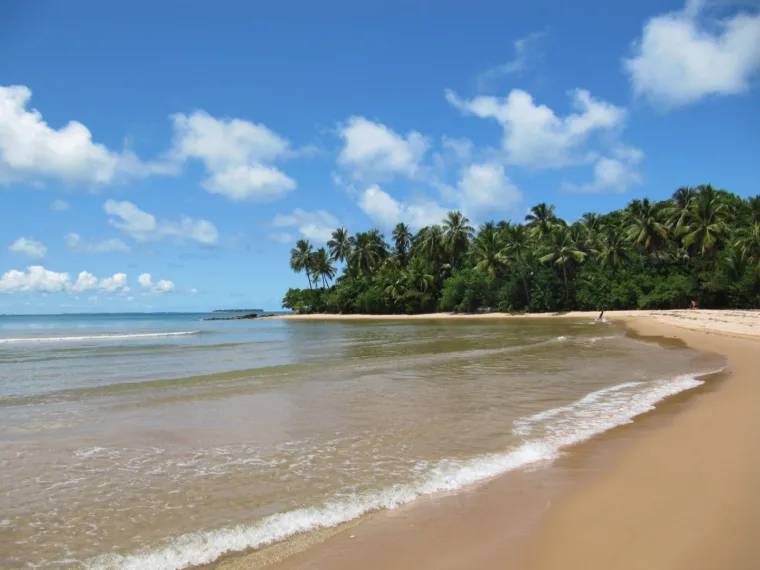
Nosy Iranja is formed from two islands connected by an extraordinary white sandbank that is revealed as the tide changes, turquoise water sitting on either side. Rather than making the long journey there and back in a single day, we stay overnight. We check into simple beach bungalows and then have the afternoon to explore: walk the sandbar, swim, snorkel, wander the island or sit on the beach and watch it happen.
Iranja is also associated with nesting sea turtles. If conditions and nature are on our side there may be an opportunity to witness turtle activity during our stay, potentially nesting females or newly hatched turtles making their way to the ocean. This can never be guaranteed, and we would not want it to be. These are wild animals following their own cycle, and any encounter is managed respectfully and without disturbing them. As the day visitors leave, Iranja becomes a very different place. We watch the sunset, eat a local barbecue and sleep with the sea a few metres away.
Wake up on a tiny island in the Indian Ocean. Before breakfast, early risers can walk out onto the beach and have the morning light and the sandbar to themselves. After breakfast there is more time to swim, walk or simply enjoy Nosy Iranja before we board the boat and start the journey back towards Nosy Be.
We are not heading straight home. We break the journey at another island known for its lemurs. Madagascar has more than a hundred recognised species and subspecies of lemur, and every single one of them is naturally found only in Madagascar. We spend time exploring and photographing before continuing our journey back to our hotel on Nosy Be.
If you love wildlife, today could be the highlight of the entire adventure. We travel by private boat towards Nosy Sakatia, where the waters contain important seagrass habitat, and that attracts one particularly impressive visitor.
Green turtles are amongst the largest sea turtles on Earth. Large adults can exceed a metre in length and weigh well over 100kg, and unlike many other sea turtles the adults feed mainly on vegetation such as seagrass. That gives us an extraordinary opportunity. With masks, snorkels and fins we quietly enter the water and search the seagrass areas where the turtles regularly feed. Seeing a huge turtle gliding effortlessly beneath you is one of those encounters that is difficult to forget.
We keep a respectful distance and never chase, touch, feed or interfere with the animals. They decide how close the encounter becomes. You do not need to be an experienced snorkeller: our team is in the water with you and all equipment is provided. We also keep our eyes open for reef fish, rays and other marine species.
Madagascar is not only about wildlife. Today we spend time with the people who call the island home. We head into the local markets with our Malagasy team, and you can expect colour, noise and an extraordinary mixture of ingredients: tropical fruit, vegetables, spices, rice, seafood and locally produced foods.
Rather than simply walking around taking photographs, we are shopping with a purpose. Our local team explain what we are buying, where it comes from and how it is traditionally used. We then take those ingredients into a relaxed Malagasy cooking experience, preparing a traditional lunch together and learning some of the techniques and flavours of everyday Malagasy cooking. Then, of course, we eat what we have made.
We have deliberately not packed every single day of this trip. Weather, sea conditions and wildlife do not work to an itinerary, so flexibility matters. If weather has affected one of our earlier boat days, today lets us move things around rather than simply losing an experience.
If everything has gone to plan, we decide together how to spend our final full day. It might mean heading back onto the ocean for another snorkel, finding a quiet beach, taking a short boat trip, or simply enjoying some downtime. After ten days of lemurs, turtles, rainforest, islands, waterfalls and reefs, there is nothing wrong with spending a few hours beside the Indian Ocean doing absolutely nothing.
We come back together later for sunset drinks and our final evening in Madagascar.
One final breakfast in Madagascar. Depending on flight times there may be time for a last swim or a walk before we check out.
We then provide private transfers to Nosy Be Airport for your journey home.
It is graded Easy, the first of our four grades. That is 11 days of it, so being ready matters more than being fast. If you are unsure whether it suits you, talk to us before you book rather than after: we would far rather move you to the right adventure than watch you struggle on the wrong one.
Every trip runs with qualified leaders, a risk assessment written for the route, emergency procedures and communications planned before departure, and local support on the ground. Travel insurance covering your chosen activities is a condition of booking.
Your passport should be valid for at least six months beyond your date of entry into Madagascar and have blank pages available. Most visitors, including British citizens, require a tourist visa for Madagascar, which is generally obtained on arrival at the airport or online in advance, and a fee applies. Entry requirements change, so it is your responsibility to check the current rules for your own nationality with the Malagasy embassy or your government's travel advice before you book flights. We will confirm the current process with you before departure.
International flights are not included. The trip starts and ends at Nosy Be Airport, also known as Fascene. There are no direct flights from the UK, and most routes connect through a hub such as Paris, Nairobi, Addis Ababa or Johannesburg, sometimes with a domestic connection through Antananarivo. Allow generous connection times, particularly on the return. Please add your flight details to your guest portal once booked so we can plan your transfers, and let us know early if you would like to extend at either end.
The currency is the Malagasy ariary. Madagascar is overwhelmingly a cash economy: bring euros or US dollars in good condition to exchange on arrival, and expect to pay cash for almost everything outside the larger hotels. Cash machines exist on Nosy Be but cannot be relied upon and may not accept foreign cards. Keep small notes for markets, tips and local purchases, and carry one card that works abroad plus a spare stored separately from the first.
See your GP or a travel clinic at least eight weeks before departure. Vaccinations commonly recommended for Madagascar include hepatitis A, typhoid and tetanus, with rabies worth discussing for a trip involving forest and remote islands. Madagascar is a malarial country and antimalarial tablets are usually recommended, so ask which option suits you and when to start. Drink bottled or filtered water only, use insect repellent at dawn and dusk, and bring any prescription medication in its original packaging with a copy of the prescription.
Comprehensive travel insurance is a condition of joining this trip. Please upload your policy number and your insurer's 24 hour emergency number to your guest portal by four weeks before departure. Please make sure your cover includes medical treatment and repatriation, cancellation and curtailment, baggage, snorkelling and boat travel. Medical facilities on Nosy Be are limited and anything serious means evacuation, so this genuinely matters. Declare pre existing conditions honestly, as an undeclared condition can void a policy.
July falls in Madagascar's dry season, which is why we run the trip then. Expect warm, largely dry days on Nosy Be, typically in the high twenties Celsius, with sea temperatures pleasant for long snorkelling sessions and lower humidity than the summer months. Nights are comfortable. Tropical showers are always possible, and wind can build over the Mozambique Channel, which is the one factor that can move a boat day. Bring a light windproof layer for the crossings, even in fine weather.
The strongest advice we give on this trip is about the sun. You will spend long days on open boats and hours floating face down over reef and seagrass, and a burnt back on Day 3 will take the shine off everything that follows. A rash vest or long sleeved swim top is more effective than any sun cream, and we ask that any cream you bring is reef safe, since we snorkel in protected marine areas. Add a wide brimmed hat that will stay on in the wind, sunglasses with a strap, and more water than you think you need.
You do not need to be an experienced snorkeller and you do not need any qualification. All equipment is provided, our team is in the water alongside you, and buoyancy aids are available for anyone who wants one. You can spend as much or as little time in the water as you like without missing out. What we do ask is that you add an honest note to your guest portal about how confident you are in water when you book. It changes how we look after you, not whether you can join us.
Wildlife can never be guaranteed, and that is exactly what makes seeing these animals in their natural environment so special. Lemurs, chameleons and reef fish are seen on almost every departure. Green turtles at Nosy Sakatia are reliable but wild. Turtle nesting or hatching on Nosy Iranja is a genuine possibility rather than a scheduled event, and dolphins on the crossings are a bonus. Our approach throughout is to watch, photograph and enjoy without interfering: no chasing, touching or feeding, and the animals decide how close the encounter becomes.
Our base on Nosy Be is a comfortable B&B style hotel close to the sea, with twin rooms as standard and a single supplement available on request. For one night on Nosy Iranja we stay in simple beach bungalows: this is a rustic, remote island where power and hot water are limited, and it will not be the most luxurious night of the trip. It is also, for most guests, the one they remember. You will need a small overnight bag for Iranja, as the rest of your luggage stays at the hotel.
This itinerary deliberately leaves Day 10 open. Weather, sea conditions and wildlife do not read itineraries, and the honest way to run a boat based trip is to hold a day in reserve rather than force a crossing in a rising sea. If everything runs as planned, the group decides together how to spend that day. If it does not, we use it to recover an experience rather than lose one. Your leader's call on sea state always takes precedence over the printed plan.
We travel with Malagasy guides, boat crews and cooks, and a good deal of what you spend stays on the island. Please cover shoulders and knees for village and market visits, always ask before photographing people, and let our team ask on your behalf where there is a language gap. Local customs, known as fady, vary from village to village and our guides will explain anything relevant. Take nothing from the reef or the beach, and take your rubbish home from the islands.
Secure your place with a deposit today, then spread the balance interest free. How payment plans work
Not sure yet?
Talk it through with someone who has been there. Call 0191 903 9936 or send us a question.
| Dates | Availability | Price | Book |
|---|---|---|---|
| 10 - 20 July 2028 | Places available15 places left | £1,995 | Book this date |
Snorkel with whale sharks, release turtle hatchlings, sleep in a beach camp.
From £1,995
£399 deposit to reserve, payment plans available
Snorkel with whale sharks and manta rays off Tofo, then go on safari in wild Zinave.
From £4,995
£999 deposit to reserve, payment plans available
Ancient rock art in Somaliland, then swim with whale sharks in Djibouti.
From £3,750
£750 deposit to reserve, payment plans available

