Uganda Gorilla & White-Water Expedition
Spend an hour with wild mountain gorillas, then raft the grade 5 White Nile.
From £4,359
£871.80 deposit to reserve, payment plans available
This expedition is far more than a mountain trip.
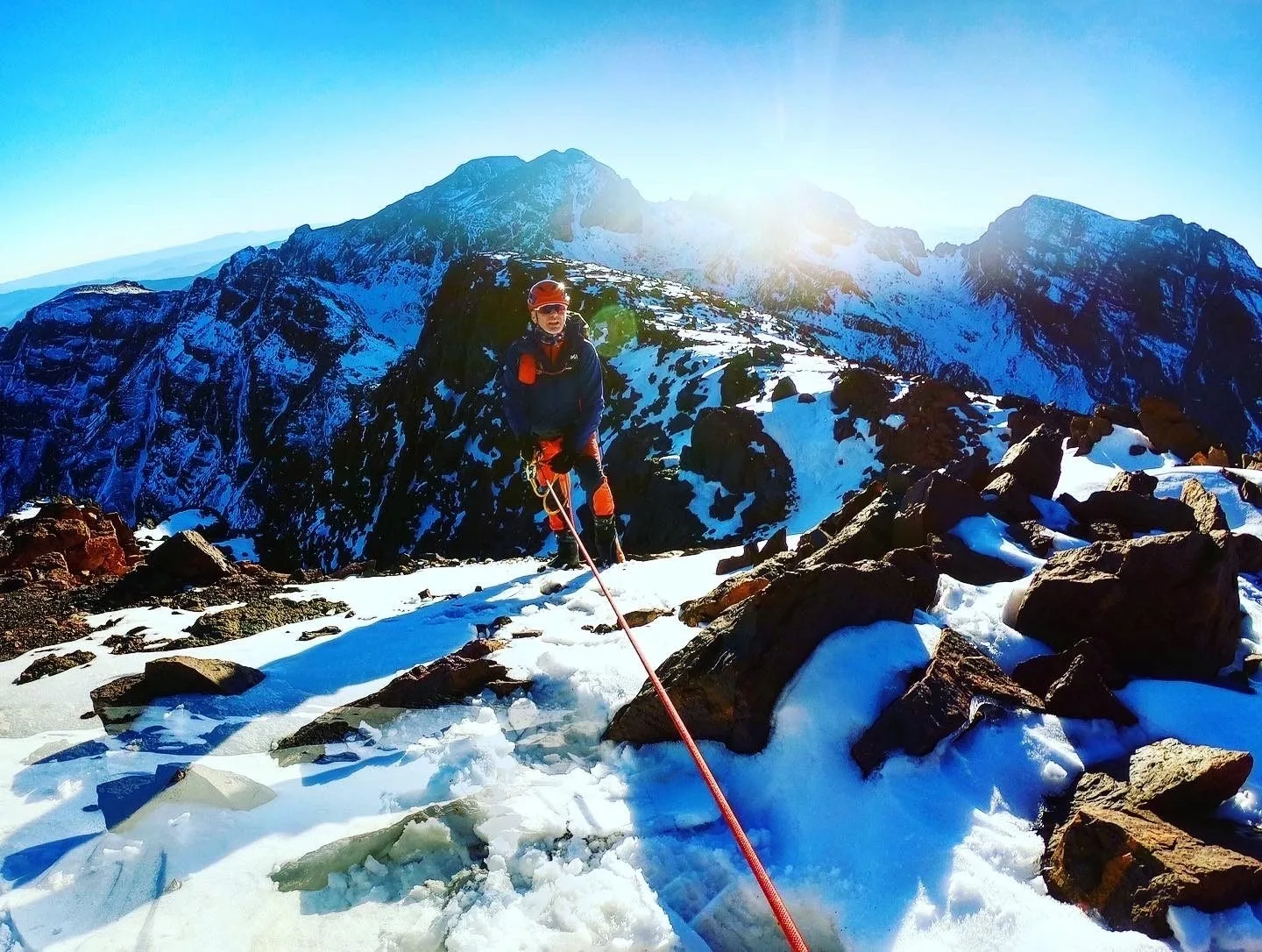
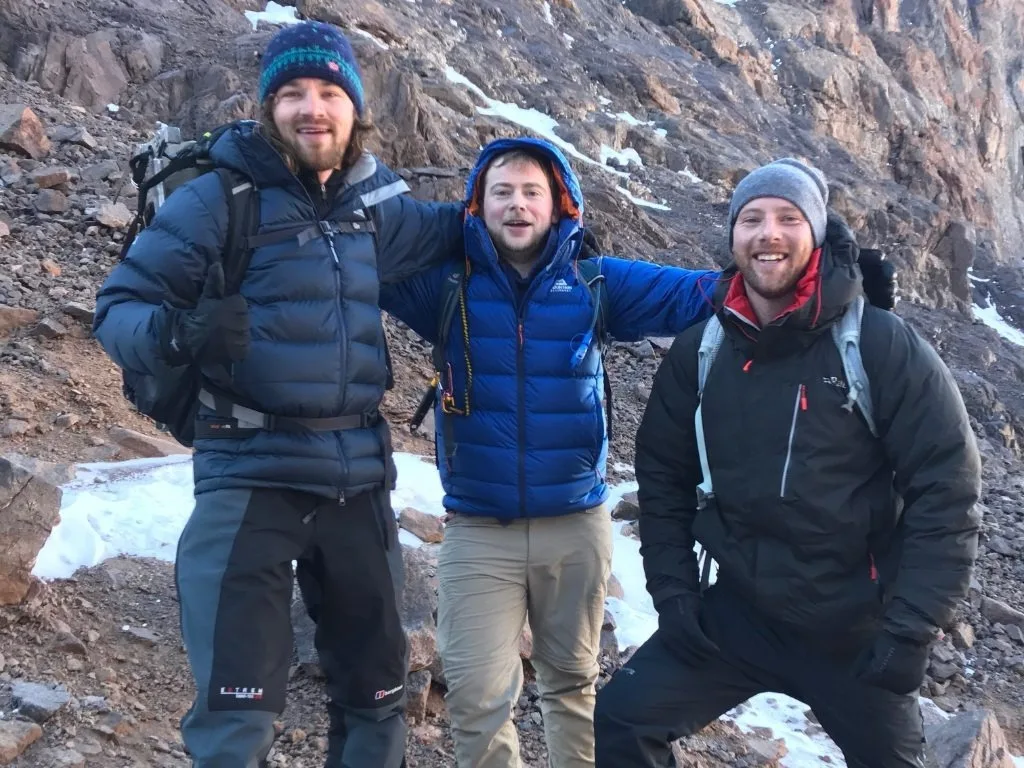
You will be climbing alongside Joe Alexander as he enters the final phase of preparation for his attempt on Mount Everest as part of the BTS27 challenge. Joe has spent more than twenty years leading expeditions around the world, guiding teams through some of the most remote and demanding environments on the planet, and this trip to the Atlas Mountains is a working part of that build up.
So you are not simply joining a guided trek. You are sharing the mountain with somebody preparing for Everest itself, and you get the mindset, the preparation and the atmosphere that goes with it. Around the table in the refuge, on the long summit push and walking up through the Atlas valleys, Joe will share the stories and the lessons from two decades of expedition leadership.
That atmosphere only happens when a team is getting ready for something genuinely big.
The mountain itself is worth the trip regardless. Jebel Toubkal stands at 4,167 metres, the highest point in North Africa, reached from the Berber village of Imlil through a valley of walnut groves and terraced fields, up past the shrine at Sidi Chamharouch to a refuge at 3,207 metres. In early March there is snow on the upper mountain and the summit push is a proper winter day out. It is hard, it is beautiful, and standing on that summit with the Sahara somewhere out beyond the haze is something you will keep.
One of our team meets you at Marrakesh Menara airport. Check the baggage hall carefully before you leave, because you are heading straight for the mountains and there is no coming back for a forgotten bag.
We drive south out of the city and up towards the Atlas, roughly ninety minutes, and the change is dramatic. Flat red plain gives way to foothills, then to a steep valley of walnut trees and terraced fields, and finally to Imlil at 1,740 metres, the Berber village that is the gateway to the whole range. If you would like a drink for the riad we can stop on the way, but be clear that alcohol is not permitted on the mountain and should not be taken up.
We take lunch and settle into the riad. Later in the afternoon there is a short walk to the local waterfall and a first proper look around Imlil, which is a good way to loosen off after a flight and get a first sense of where you are.
After breakfast the big bags go onto the mules and you carry a daypack with what you need for the day, which means water, warm layers and a waterproof. The team will show you exactly what should be in it.
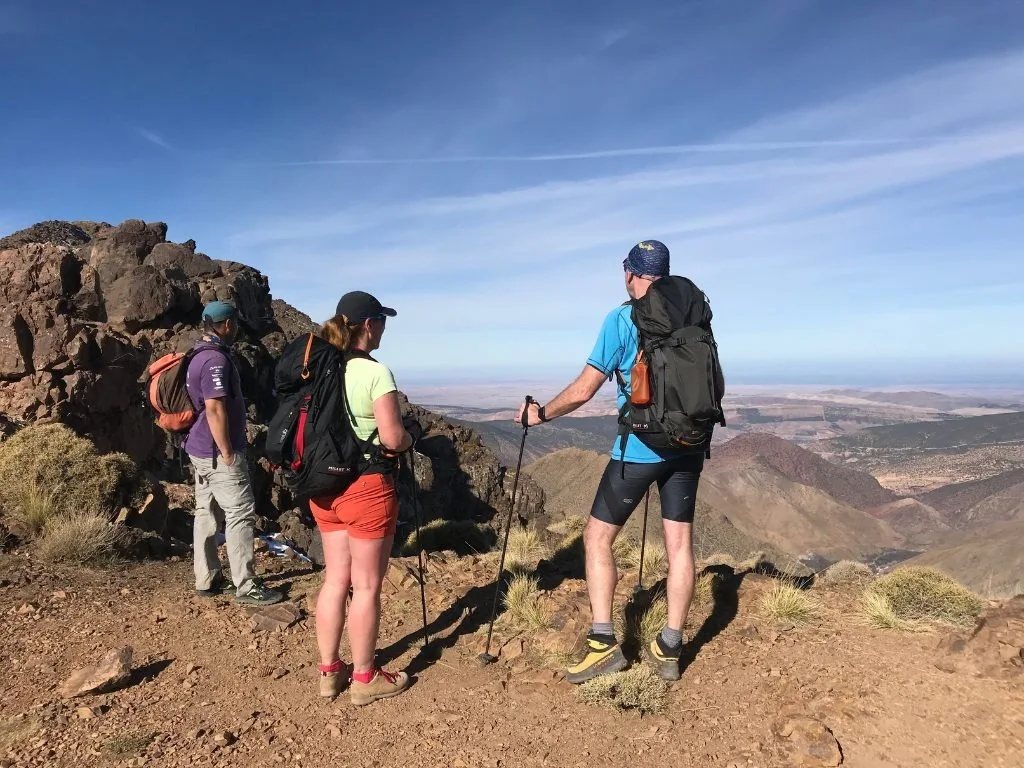
The walk up takes around four to five hours with stops, climbing steadily out of Imlil through Aroumd and up the valley on a good mule track. We pass the whitewashed shrine at Sidi Chamharouch at 2,350 metres, which is a place of pilgrimage and not open to non Muslims, then keep climbing as the trees run out and the valley opens into rock and snow. Lunch is on the trail and it is a good deal better than you expect at that altitude.
The refuge sits at 3,207 metres beneath the summit cirque. When you arrive we talk through the plan for the summit push and what tomorrow actually involves. The team will have dinner ready, and after that it is about resting, drinking plenty and getting your kit laid out for a very early start.
Go outside for sunset. It is cold and it is entirely worth it.
A very early start, so have your head torch and warm clothing laid out the night before. The team will help you with crampons and any technical kit before we leave.
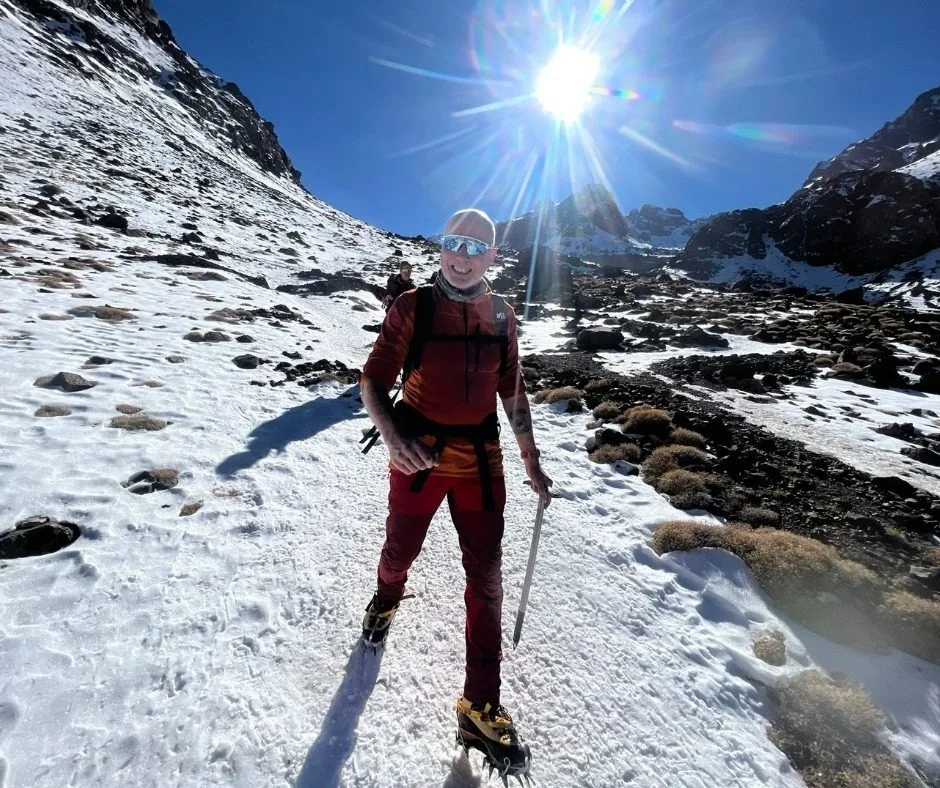
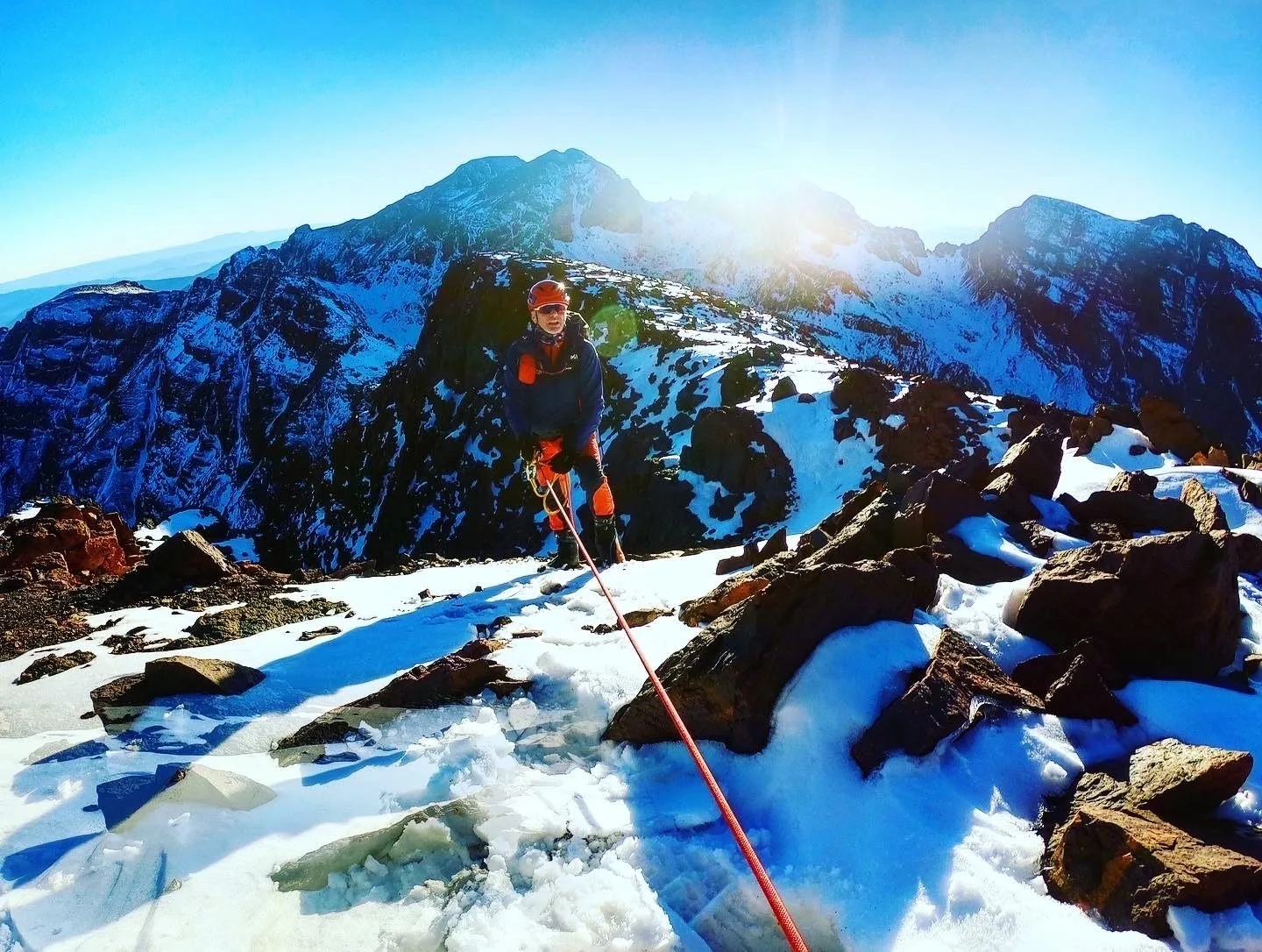
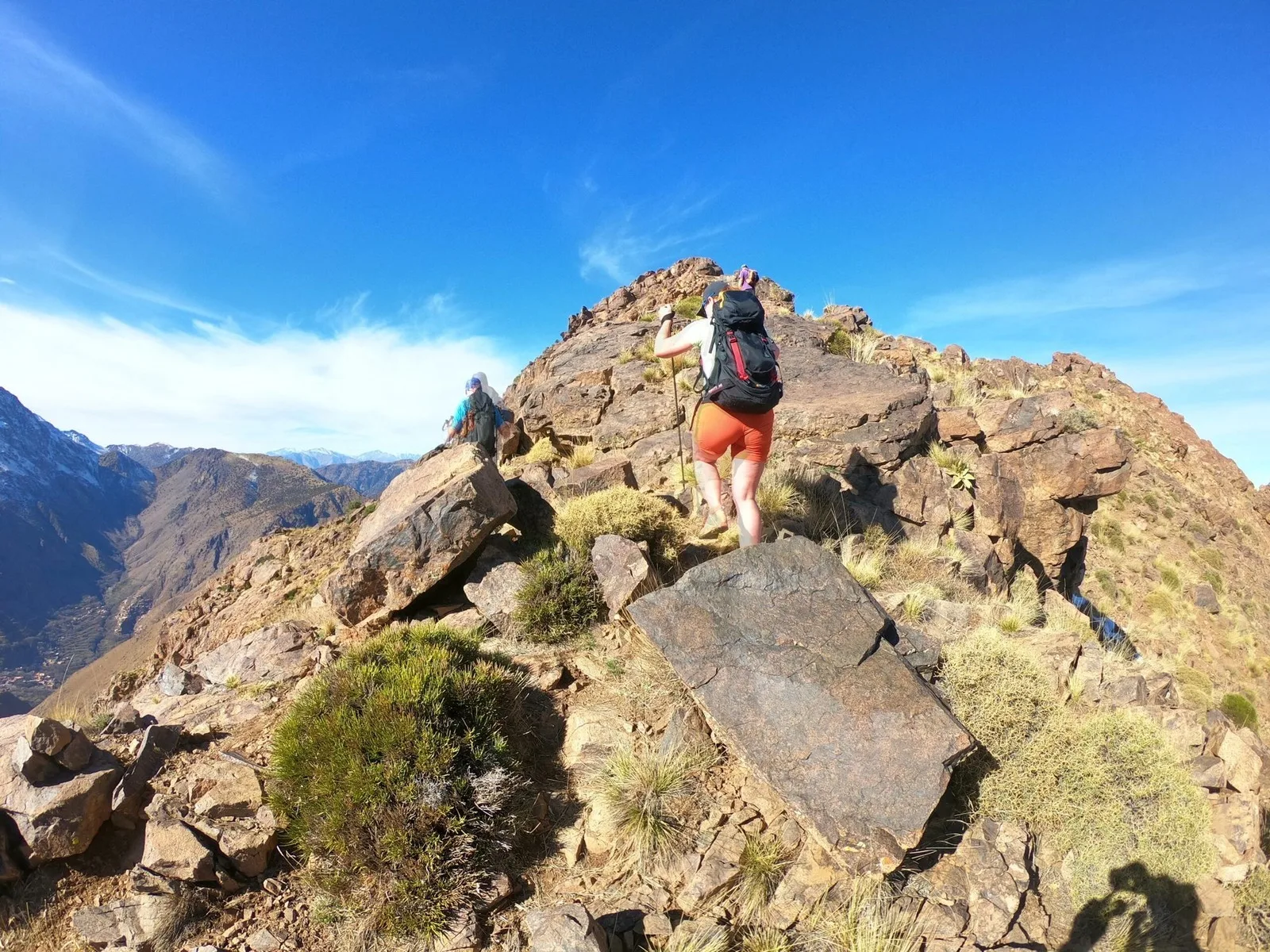
You need to be mentally ready for a long day. The ascent takes around six to eight hours in winter conditions, climbing out of the refuge onto the snow slopes of the south cirque, working up through a broad rocky couloir and then out onto the summit ridge. It is not technical climbing, but it is steep, it is cold, the air is thin and it goes on a long time. This is the day the training pays for itself.
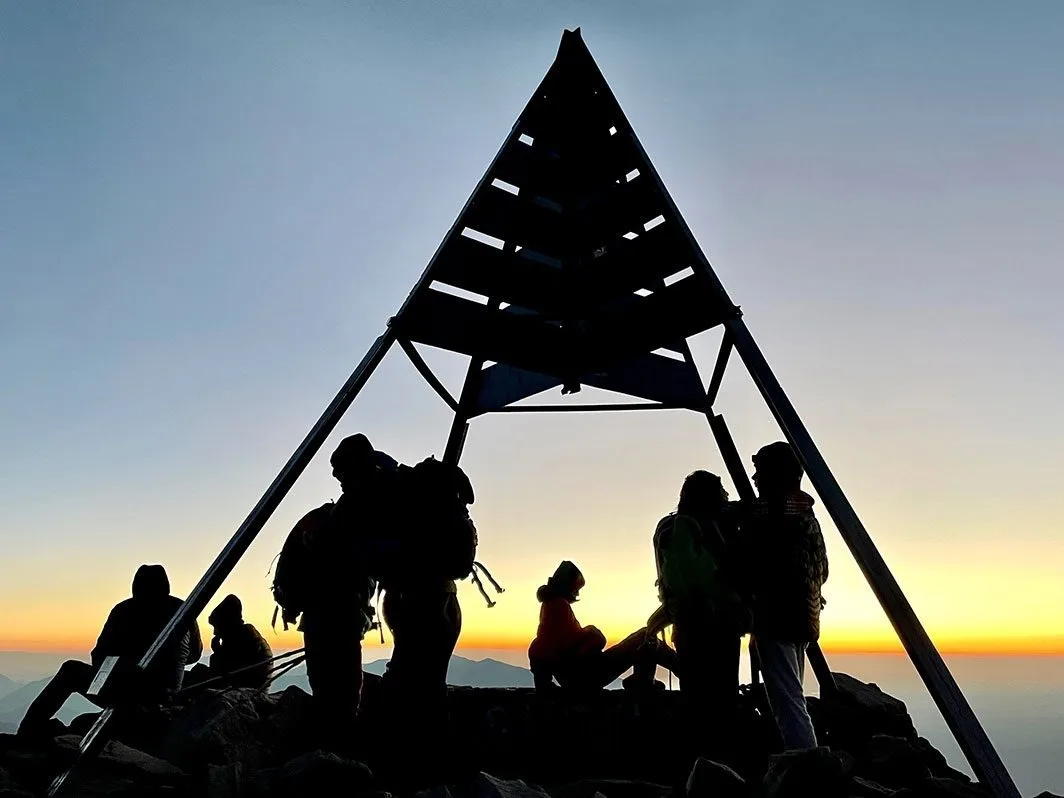
Then the summit itself at 4,167 metres, the highest point in North Africa, with the whole Atlas range falling away below you and, on a clear day, the haze of the Sahara out to the south.
The descent takes around four hours back to the refuge, and it is harder on the legs than anyone expects. Dinner, a stove, and a night that most people sleep through very easily indeed.
A far more relaxed day. After breakfast we walk back down the valley, around four hours, retracing the route through Sidi Chamharouch and Aroumd to Imlil.
Walking down a mountain you climbed the day before is one of the better feelings available. The snow gives way to rock, then to scrub, then to walnut trees and running water, and by the time you reach the village you have dropped nearly 1,500 metres and the air feels thick and warm.
Back at the riad there is a hot shower, a roof terrace and the mountain sitting there behind you, which now looks completely different from how it looked on the way up.
A late morning departure and the drive back down to Marrakesh, arriving early afternoon.
Our riad sits in the centre of the city, a few minutes from the medina, the souks and the Jemaa el-Fnaa, which is one of the great public spaces anywhere and gets steadily madder as the evening goes on: food stalls, musicians, storytellers, smoke and noise.
The afternoon and evening are yours. Wander the souks, sit on a terrace with a mint tea and watch the square fill up, find a hammam and steam the mountain out of your legs, or eat somewhere excellent. Dinner tonight is not included, which is deliberate, since Marrakesh is a city best eaten in on your own terms. Your leader will point you at the good places.
Breakfast on the terrace, then the short transfer out to Marrakesh Menara airport for your flight home.
You leave having stood on the highest point in North Africa, in winter, in a small team, alongside somebody on his way to Everest. That is a good week's work.
It is graded Hard, the third of our four grades. That is 6 days of it, so being ready matters more than being fast. The highest point is about 4,167m, so altitude is part of what makes it hard. If you are unsure whether it suits you, talk to us before you book rather than after: we would far rather move you to the right adventure than watch you struggle on the wrong one.
Every trip runs with qualified leaders, a risk assessment written for the route, emergency procedures and communications planned before departure, and local support on the ground. Travel insurance covering your chosen activities is a condition of booking.
The expedition begins and ends at Marrakesh Menara airport. There are direct flights from a number of UK airports and the route is well served, which is part of what makes this trip so accessible. Book to arrive by early afternoon on Day 1 so the group can travel up to Imlil together, and to depart from mid morning on Day 6. Check your times against those windows before booking, and ask us if you are unsure.
British citizens and many other nationalities can visit Morocco for tourism without a visa for short stays. Your passport should have at least six months validity beyond your travel dates. Other nationalities should check their own requirements early. Entry rules change from time to time, so confirm against official Moroccan government guidance close to departure.
Travel insurance is mandatory and there is one specific thing to check. Your policy must cover trekking to at least 4,167 metres and it must cover the use of crampons and an ice axe. A great many policies cover trekking but classify anything involving crampons as winter mountaineering and exclude it. Mountain rescue and repatriation cover is also essential. Read the wording rather than assuming, and upload your policy number and your insurer's 24 hour emergency number to your guest portal by four weeks before departure.
This is graded Hard, the third of our four grades, and the grade is honest. There is no technical climbing and no ropework required of you, but summit day is typically ten to twelve hours, in winter conditions, at altitude, and the two big descents are hard on the legs. Good general fitness and some hill walking experience are necessary. If you can comfortably manage five hours of hill walking with 800 metres of ascent, on consecutive days, you are in the right place.
Toubkal stands at 4,167 metres and you sleep at 3,207 metres at the refuge. The profile is fast by mountaineering standards, going from a flight to the refuge in two days, so mild symptoms are common and normal: headache, breathlessness on the climbs, poor sleep and reduced appetite. Serious altitude illness is uncommon here but possible, and the treatment is always descent, which is straightforward on this mountain. Drink plenty, walk slowly and tell your guide honestly how you feel.
In early March there is snow on the upper mountain and the summit push is a winter day. You will use crampons and carry an ice axe. No previous experience is needed and the team runs a full briefing before you step onto snow, but you must arrive with crampons that fit your boots, which means a stiff soled boot rated to take them. Hire can be arranged with notice. The Toubkal cirque holds avalanche risk in winter and the decision on whether and how far to go belongs to the lead guide and the local team.
Marrakesh in early March is pleasant, often in the high teens or low twenties Celsius. Imlil is noticeably cooler. The refuge is cold and unheated apart from the stove in the communal room. On the summit, expect temperatures well below freezing with significant wind chill, and the possibility of snow and poor visibility at any time. Pack for both ends of that range.
Two nights in a traditional riad in Imlil with twin rooms, a roof terrace and hot showers on request. Two nights in the Toubkal mountain refuge, which is a very basic mountain lodge with dormitory bunks, shared facilities and a wood burning stove in the communal room. One night in a riad in central Marrakesh on a bed and breakfast basis. Bring earplugs for the refuge and a sleeping bag or liner for the bunks.
All expedition meals are included, from lunch on the arrival day through to breakfast on departure day, and the mountain food is far better than you would expect at 3,200 metres. The one exception is dinner in Marrakesh on Day 5, which is not included so you can eat where you like in the city. Vegetarian and most dietary requirements can be accommodated if added to your guest portal when you book, since supplies go up the mountain by mule.
Alcohol is not permitted on the mountain and should not be taken up. You are welcome to have a drink in the riad, and if you would like something we can stop on the drive up from Marrakesh. Morocco is a Muslim country and alcohol is not sold everywhere, so do not assume it will be available in the villages.
The currency is the Moroccan dirham, which is a closed currency, meaning you cannot buy it before you travel and cannot exchange it once you get home. Change money on arrival and spend or change what is left before you fly out. Cash is essential in Imlil and on the mountain, where cards are not accepted. ATMs are available in Marrakesh and in Asni, but do not rely on finding one in Imlil.
Tips for the mountain guides, the cook and the muleteers are not included and are a genuinely important part of how the local mountain economy works. Your expedition leader will advise sensible amounts and the group traditionally puts it together and hands it over on the last night in Imlil. Bring this money in cash, in dirham.
The Imlil valley is a Berber farming community rather than a resort, and the shrine at Sidi Chamharouch on the way up is an active place of pilgrimage which non Muslims do not enter. Dress modestly in the villages and in Marrakesh, covering shoulders and knees, and always ask before photographing people. In the Marrakesh medina expect a certain amount of hustle, unofficial guides and firm sales technique. A polite, good humoured no thank you works perfectly well.
See a travel clinic or your GP well before departure to discuss Morocco. Routine vaccinations plus hepatitis A are commonly recommended. Stomach upsets are the most common complaint, so drink bottled or purified water, including for brushing your teeth, use hand sanitiser before eating, and carry rehydration sachets. Bring your own basic first aid kit and any personal medication in your hand luggage in original packaging.
The group is capped at ten and the trip is for adults aged eighteen and over. It suits solo travellers, couples and groups of friends who have some hill walking behind them and want a real mountain rather than a walking holiday. Solo travellers are common and very welcome. Accommodation is twin share in the riads and dormitory in the refuge.
Secure your place with a deposit today, then spread the balance interest free. How payment plans work
Not sure yet?
Talk it through with someone who has been there. Call 0191 903 9936 or send us a question.
| Dates | Availability | Price | Book |
|---|---|---|---|
| 4 - 9 March 2027 | Places available10 places left | £795 | Book this date |
Spend an hour with wild mountain gorillas, then raft the grade 5 White Nile.
From £4,359
£871.80 deposit to reserve, payment plans available
Turkey's highest peak, 5,137m, climbed for sunrise from a high camp at 4,200m.
From £895
£179 deposit to reserve, payment plans available
The summit that stands closest to the sun. Eleven days of glacier climbing in Ecuador.
From £2,995
£350 deposit to reserve, payment plans available