Bazardüzü: The Roof of Azerbaijan
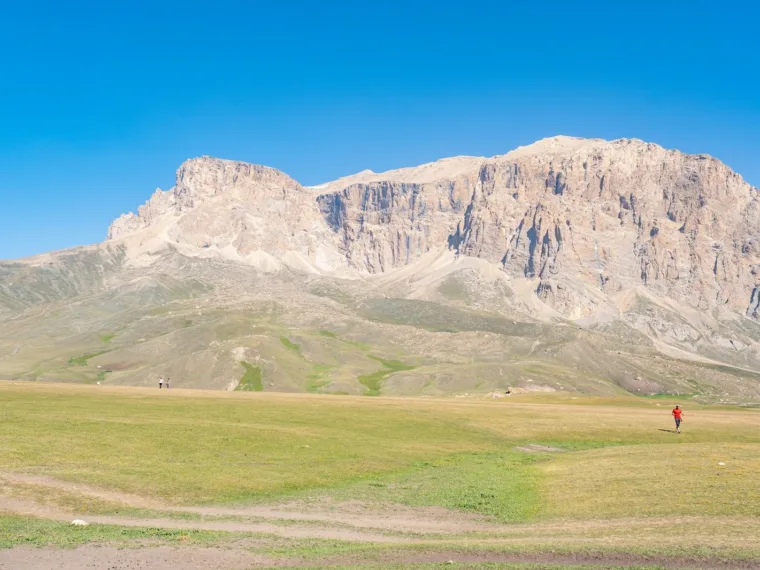
Seven days from the Caspian Sea to the highest point in Azerbaijan.
From £1,600
£320 deposit to reserve, payment plans available

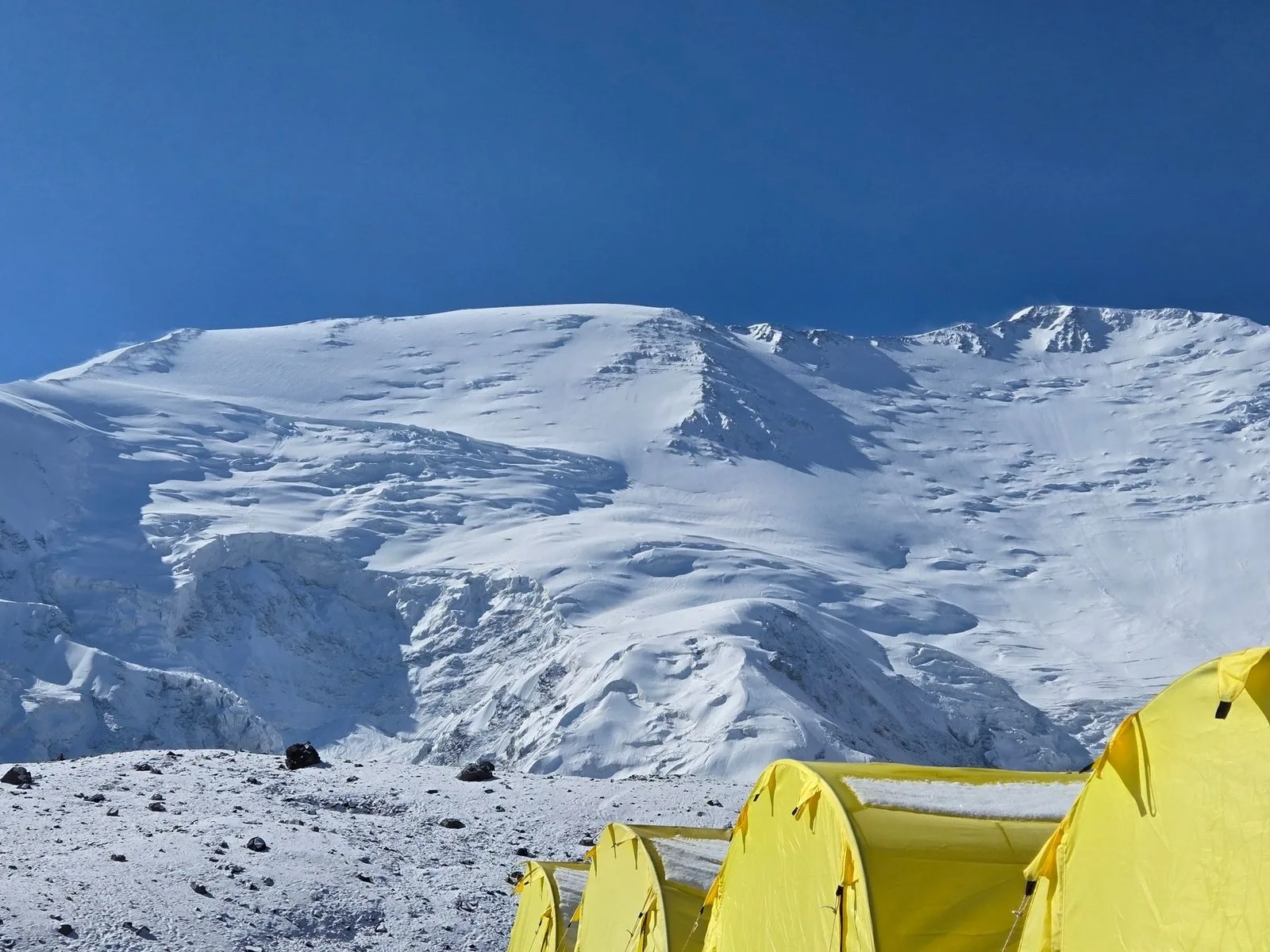
Twenty-three days in the Pamirs of Kyrgyzstan on the normal route up Lenin Peak, 7,134m. A serious high-altitude expedition on a mountain that does not demand a climbing CV, for a maximum of eight guests.
Twenty-three days in Kyrgyzstan on the normal route up Lenin Peak, 7,134m, in the Trans-Alay range of the Pamirs. From Bishkek and Osh the road runs south into the Alay Valley to Achik-Tash Base Camp at 3,600m, and from there we start climbing.
At 7,134m this is a serious high-altitude expedition, but the normal route is not technically hard. That combination makes it a realistic objective for a very fit mountain walker rather than a mountaineer. You do not need an impressive climbing CV. You do need fitness, mountain experience, patience and the willingness to train for six months and learn on the way.
How the mountain is climbed
The expedition is built around two trips up the mountain. The first climbs through Camp 1 at 4,400m, an acclimatisation peak of around 5,100m and Camp 2 at 5,300m to Camp 3 at 6,100m, then turns around and descends 2,500 vertical metres to Base Camp for hot food and two days of doing very little. That descent is what makes the summit possible.
The second goes back up the same ground, which by then feels like a different mountain, and leaves Camp 3 at around three in the morning for more than 1,000 vertical metres of ascent. Ten to fourteen hours, a plateau at 6,900m where everything slows down, and a turnaround time of 14:00 that does not move. Two reserve days sit behind the plan for weather, recovery or a second summit window.
Who it suits
Very fit hill walkers with real mountain experience who will train seriously for six months. No climbing CV is needed, but you will sleep above 5,300m and use crampons on a glacier. Most people join this kind of expedition on their own and share a tent, so a solo traveller is the norm here. It is not for anyone unwilling to turn around, or who needs comfort, privacy or a fixed schedule.
Maximum eight guests. Small team, big mountain, one extraordinary adventure.
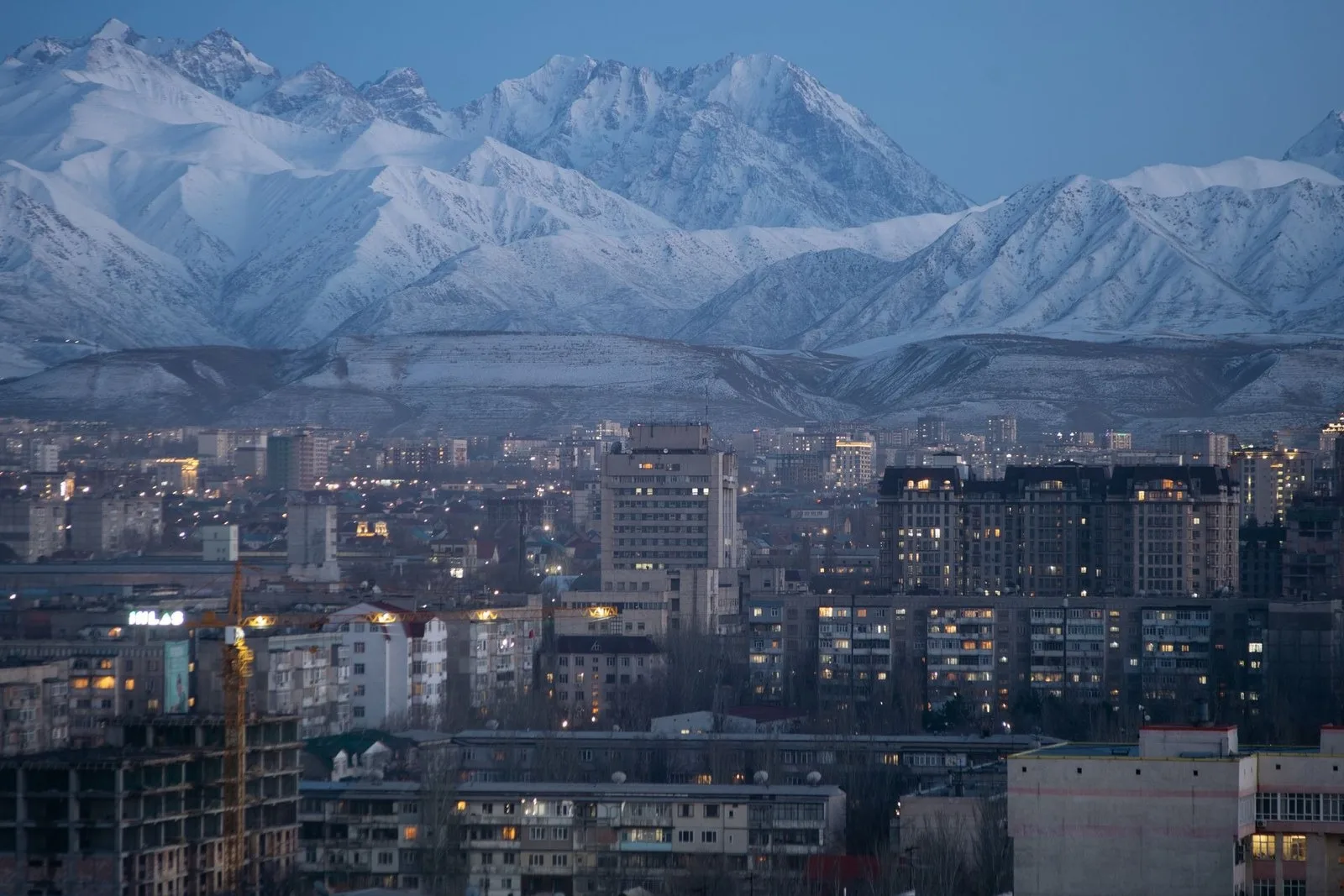
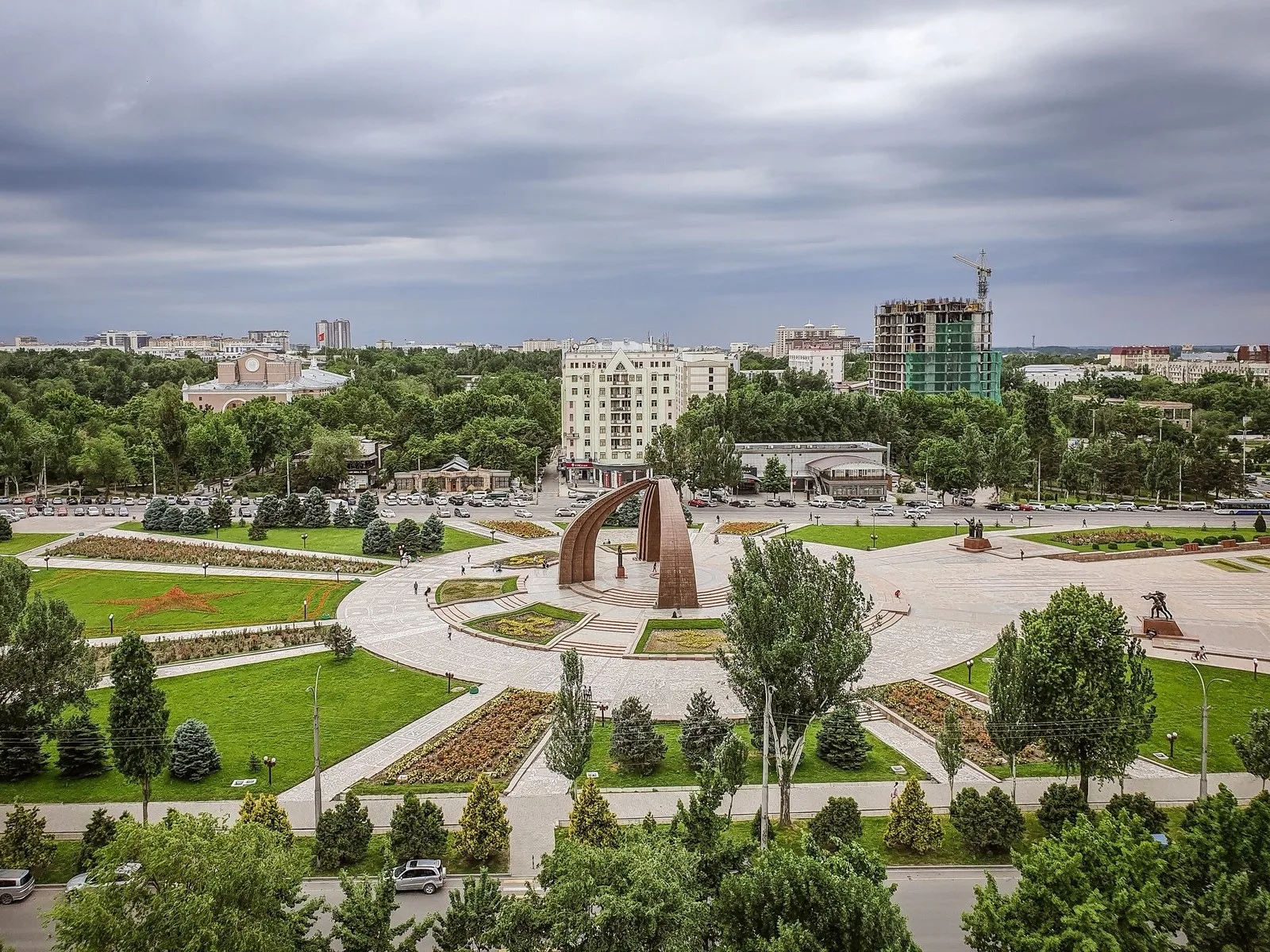
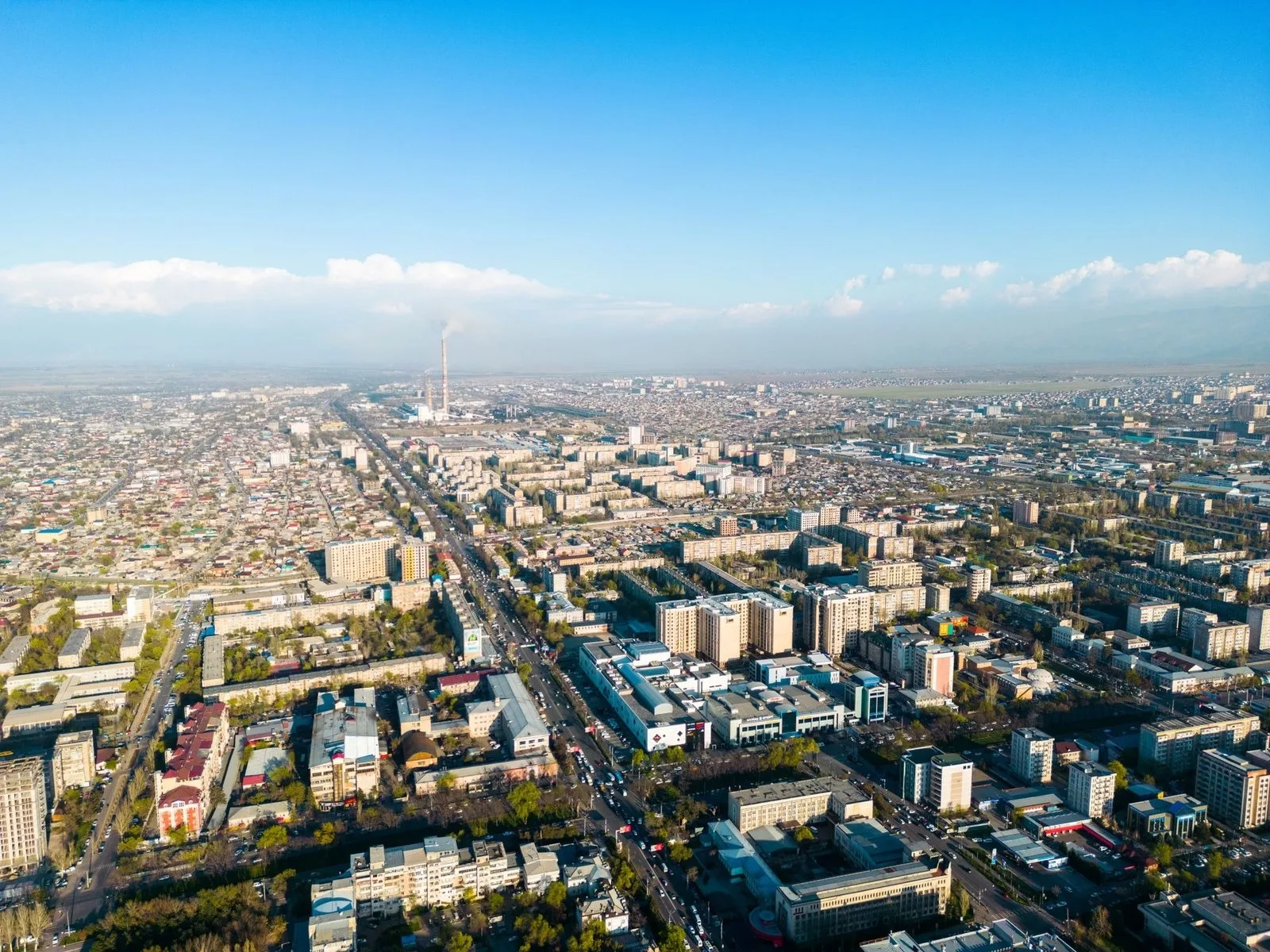
The expedition begins in Bishkek, the capital of Kyrgyzstan, a low-rise Soviet-planned city of wide streets and enormous plane trees sitting at around 800m below the Kyrgyz Ala-Too range.
You are met at the airport and transferred to the hotel. Depending on arrival times there is a chance to sleep, eat and walk off the flight. In the evening the team meets properly for the first time: the plan for the next three weeks, how the acclimatisation rotations work, the weather picture, and the systems we will use on the mountain.
This is also where personal equipment gets looked at properly. Anything missing is far easier to solve in Bishkek than at 4,400m.
We travel south from Bishkek to Osh, the second city of Kyrgyzstan and one of the oldest settlements in Central Asia, sitting at around 960m at the eastern end of the Fergana Valley. The journey is made by internal flight or by road depending on schedules, and is roughly an hour in the air against a long day over two high passes by vehicle.
Osh is a different country from Bishkek: hotter, older and busier, built around the Sulaiman-Too rock that rises straight out of the middle of the city. There is usually time in the afternoon to walk into the bazaar, one of the great markets of the region and unchanged in function for a couple of thousand years.
Last-minute supplies get bought today. Tomorrow the road runs out of towns.
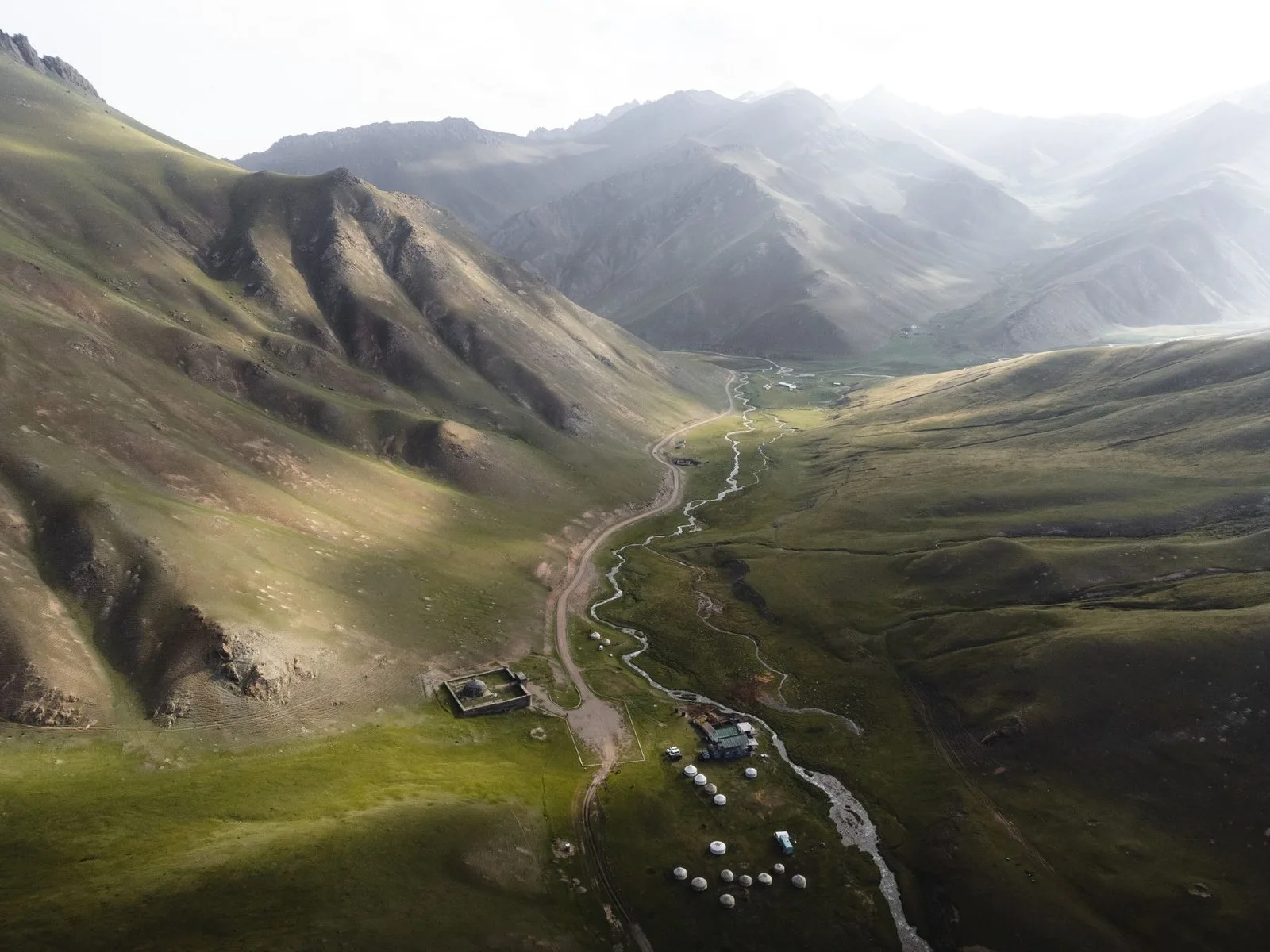
A long drive of around 280km and five to six hours, and one of the great road journeys in Central Asia. The route climbs out of the Fergana Valley and crosses the Taldyk Pass at 3,615m, where the tarmac hairpins up a bare hillside and the view opens onto the Alay Valley: a broad grassland plain, thirty kilometres across, with the Trans-Alay range standing along the far side of it like a wall.
Somewhere along that wall is Lenin Peak. From the valley floor it does not look like the highest thing there, which is one of the odd things about it.
We turn off the Pamir Highway and climb the rough track to Achik-Tash Base Camp at around 3,600m, on a meadow below the moraines. Camp is already standing when we arrive: sleeping tents, a dining tent, showers and a kitchen. The rest of the day is spent doing very little, which at this altitude is the correct plan.
The first full day is short on distance and long on detail. We walk up onto the moraines above camp, three or four hours out and back, gaining two or three hundred metres and coming straight back down. It is not training. It is the standard first move at altitude: go a little higher than you sleep, then sleep low.
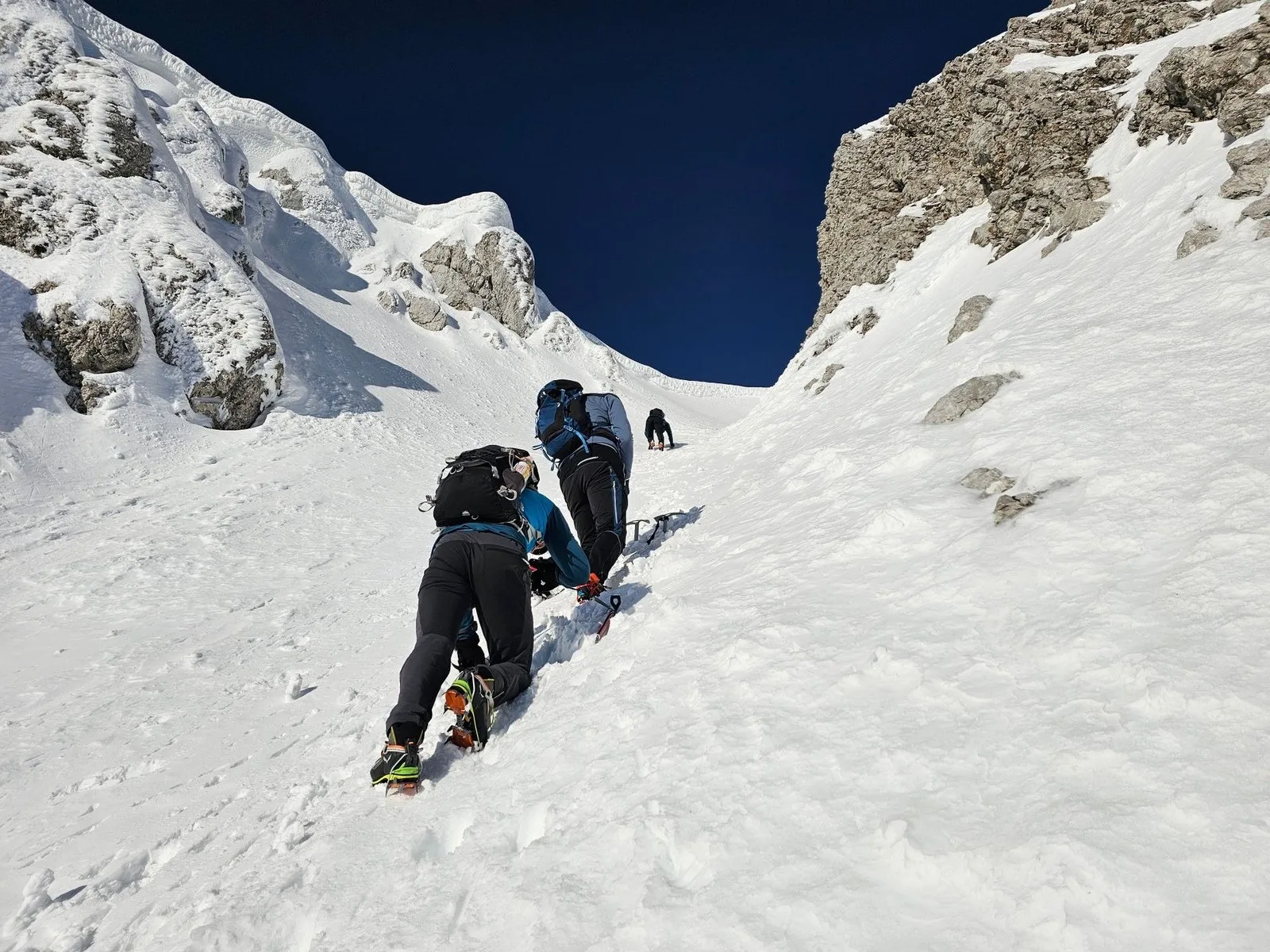
The afternoon is the first proper skills session. Crampons on and off until it is boring, ice axe in the uphill hand, walking on the flat of the foot, and the rope systems we will use above Camp 1. Anyone who has walked in Scotland in winter will recognise most of it. Anyone who has not will be doing it in the right place to learn.
Headaches are normal today, appetite is not always. Both are expected and both are watched.
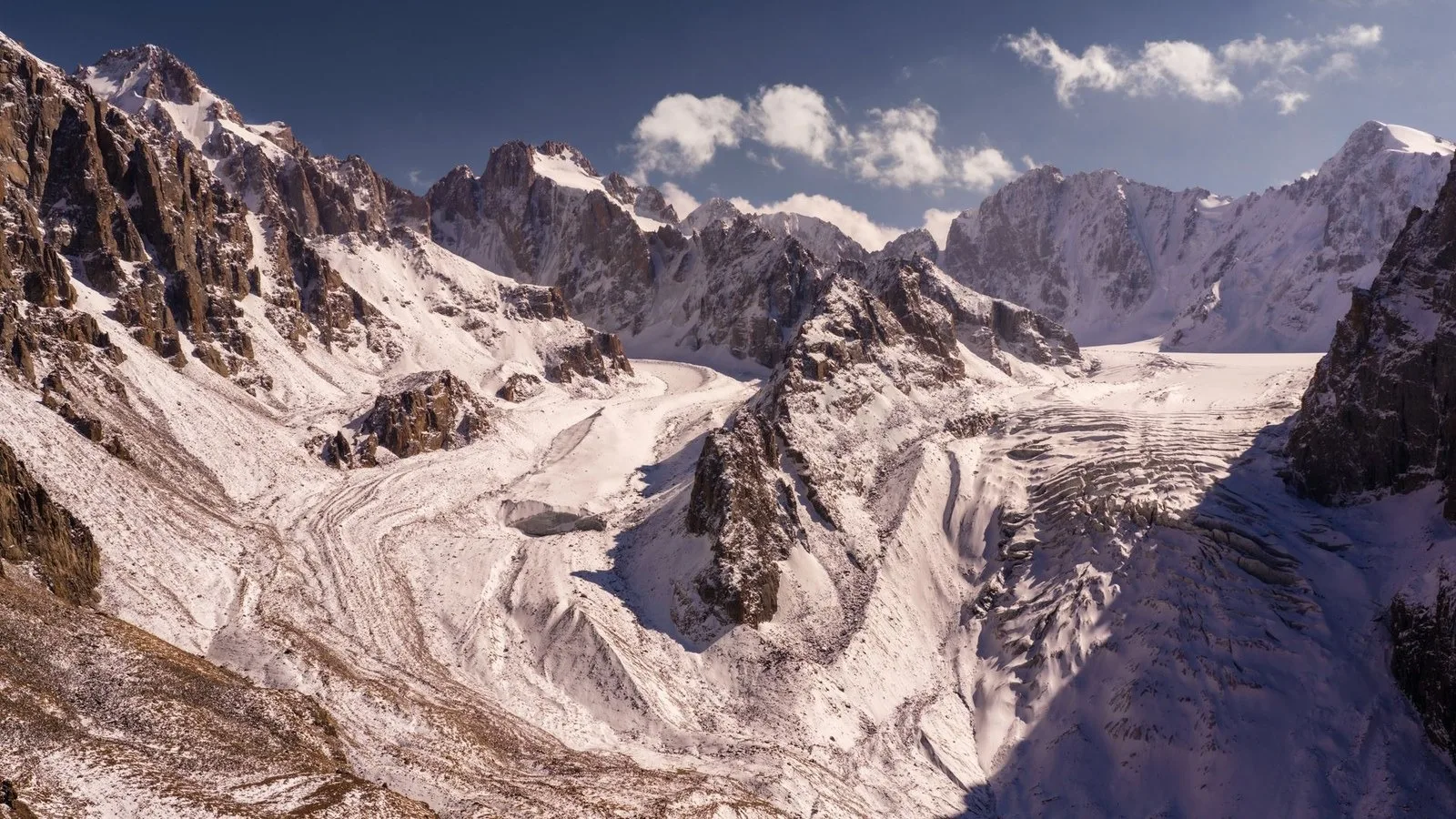
The standard acclimatisation day from Achik-Tash, and the one that tells us most about how the team is adapting. We climb to the Puteshestvennikov Pass, the Travellers' Pass, at around 4,150m: five to six hours out and back, roughly 550m of ascent on rough grass and moraine, with a long view from the top across the Lenin Glacier towards Camp 1 and the route beyond it.
It is the first time the mountain shows you the shape of the next fortnight. From the pass you can see where Camp 1 sits, the glacier we will cross, and the long white slopes running up towards Camp 2.
Back down to Base Camp for the night, sleeping at 3,600m again. Walk high, sleep low, which is the whole strategy in a single sentence.
The expedition properly starts today. We leave Base Camp carrying personal kit, climb back to the Puteshestvennikov Pass, and then drop onto the Lenin Glacier on the far side and follow it up to Camp 1 at around 4,400m. Roughly 12km and six to seven hours, longer with a heavy sack.
This is the first ground where the rope comes out and the crevasse terrain is real rather than theoretical. The glacier here is mostly straightforward, but it is glacier, and we move on it as a roped team.
Camp 1 sits on moraine below the main mountain, and it is a working camp rather than a comfortable one: two-person tents, a mess tent, meals provided, and a great deal of the afternoon spent melting snow and drinking. The first night at 4,400m is usually the worst night of the expedition so far.
A day spent gaining altitude without moving camp. For those going well there is the option of climbing the small acclimatisation peak above the camp at around 5,100m, a straightforward snow ascent where crampons and axe are needed for the final section and the view across the Pamirs is out of proportion to the effort.
Others will make a carry partway towards Camp 2 and come back down, which does the same acclimatisation job with less commitment. Either way the principle holds: touch a higher altitude, then come back to 4,400m to sleep.
This is also a day for the practical business of high-altitude life. Melting snow takes longer than you think. Everything takes longer than you think. Learning that now, at 4,400m, is considerably better than learning it at 6,100m.
The hardest day of the first rotation. From Camp 1 the route climbs onto the mountain itself and gains around 900 vertical metres over roughly 5km to Camp 2 at about 5,300m. Five to seven hours on a good day, longer in deep snow.
This section carries the most objective hazard on the route. The slopes above Camp 1 are avalanche terrain, and the timing of the day, the snow conditions and the decision to go or wait belong to the mountain team rather than the calendar. Expect early starts, and expect the possibility of being told to sit still and drink tea instead.
Camp 2 sits in a corridor at around 5,300m. It is busy, it is high, and the first night there is where most people meet real altitude for the first time. Appetite goes. Sleep is broken. This is normal and it is exactly what the rotation exists to expose you to.
From Camp 2 the route climbs to Camp 3 at around 6,100m, near Razdelnaya Peak, gaining roughly 800m over about 2.5km. Four to seven hours. The first and last parts are steep, with an easier middle section, and the whole camp is exposed to wind in a way the lower camps are not.
At 6,100m everything slows down. Boots take twice as long to put on. Conversations get shorter. The team is now higher than the summit of almost every mountain in Europe, sleeping on snow, melting water in a tent.
And then, having got here, we turn around. Not because the expedition is over. Because it is only just beginning. The body has now been exposed to over 6,000m, and the job of the next few days is to let it use that.
A long descent of around 2,500 vertical metres, from 6,100m all the way back to Achik-Tash. It takes most of the day and it is hard on the legs, but every metre of it is doing something useful: the body repairs at 3,600m in a way it simply cannot at 6,100m.
Camp 2, then Camp 1, then the glacier, then the pass, then the meadow. The air gets thicker with every hour. By the time the dining tent is in sight most people are talking again.
Boots off. Proper food. Drink. Sleep. For a couple of days the mountain can wait.
Nothing is scheduled today, and that is the point. The team has been above 6,000m and is now sitting at 3,600m with more red blood cells than it arrived with. What turns that into a summit is doing very little for two days.
Eat more than you feel like. Drink more than you feel like. Sleep in the afternoon if you can. Wash clothes, read, sit in the sun, look at the mountain.
The leaders spend the day on the other half of the job: watching the weather, talking to the mountain team, checking equipment and quietly assessing how every member of the team is actually coping.
A second day of doing very little, with one piece of work in it. In the afternoon the team sits down together and goes through the plan for the summit rotation: the timings, the weather picture, the turnaround times, who is going and on what basis.
Equipment is checked properly for the last time. Crampons on the boots they will actually be worn with. Batteries. Down suit or jacket and salopettes tried on. Goggles found rather than assumed. Everything that goes high gets laid out and looked at.
By the evening the plan is set, and it will change, because mountains do not work to calendars. That is what the reserve days are for.
Boots back on. The same 12km over the Puteshestvennikov Pass and up the glacier to Camp 1 at 4,400m, six to seven hours, and it feels like a different mountain.
That is the acclimatisation working. The pass that took everything a week ago goes by at a conversational pace. The glacier is familiar. The rope work is automatic rather than remembered.
We have already crossed this glacier. We have already slept high. We have already stood above 6,000m. This time we are going back with a different objective.
An early start for the climb back to Camp 2 at 5,300m, five to seven hours and around 900m of ascent. The hazardous slopes above Camp 1 are crossed early and quickly, spaced out, with the snow conditions assessed before anyone steps onto them.
The difference from the first rotation is enormous and entirely internal. The same ground, the same altitude, a body that has already been to 6,100m. People eat at Camp 2 this time. Some of them even sleep.
The afternoon is spent doing nothing that is not eating, drinking or resting. Tomorrow is the last move before the summit.
A deliberately contained day: around 2.5km and 800m of ascent to Camp 3 at 6,100m, four to seven hours, arriving with as much of the day left as possible.
Then life becomes very simple. Eat. Drink. Stay warm. Prepare your equipment. Try to sleep. Everything is laid out tonight: boots, crampons, harness, head torch, gloves, goggles, the down layer, the flask. At 6,100m in the dark you will not be finding things.
Outside the tent the temperature falls away. Sleep will be poor and nobody minds. The alarm goes sometime before dawn.
The alarm goes in the dark. Headtorch on, harness on, crampons on. We step outside into the cold with over 1,000 vertical metres of mountain above us, leaving around three or four in the morning.
The route climbs to the Razdelnaya col and onto the long upper slopes. There is a steeper ice section on the way, and then the plateau at around 6,900 to 7,000m, which is where the mountain plays its trick: it is nearly flat, and it is exhausting. Above 7,000m even simple movement is hard work. There is no sprint for the summit. Step. Breathe. Step. Breathe.
Gradually the darkness gives way and the sun comes up across the Pamirs, mountains running away into Kyrgyzstan and Tajikistan. And if the weather, the mountain and our bodies allow, there is gradually less and less ground above, until eventually there is not any. Ten to fourteen hours round trip to Camp 3, and the turnaround time is fixed at 14:00 whether the summit has been reached or not, because getting safely down is half the job.
Down. From 6,100m through Camp 2 and on to Camp 1 at 4,400m, around 7.5km and 1,700 vertical metres of descent.
Tired legs, a big day behind, and the most common day on any expedition for a rolled ankle or a crampon catching a gaiter. We move carefully and we take breaks that feel unnecessary.
The air thickens with every hundred metres. Somewhere around Camp 2 people start talking about food again, and by Camp 1 the conversation has turned to what everyone is going to eat when they get to Base Camp.
The final mountain day: around 12km back across the Lenin Glacier, up to the Puteshestvennikov Pass and down the far side to Achik-Tash at 3,600m. Roughly 800m of descent overall and a few hundred of ascent to the pass, which at this stage of the trip everyone notices.
From the pass there is a last look back at the mountain, at Camp 1 down on the moraine and the long white slopes above it, from a team that now knows exactly what is up there.
Then down to the meadow, and the dining tent, and a shower, and boots off for good.
The itinerary carries deliberate flexibility, because mountains do not work to our calendar. Weather changes, snow conditions change, and people acclimatise differently.
This day is one of two held back. It is shown here, after the descent, but it does not belong at a fixed point in the calendar: it floats. It may be spent waiting out weather at Camp 2, or resting an extra day at Base Camp before the summit rotation, or taking a second run at the summit window, or simply moving between camps more slowly than planned.
If the mountain has not needed it, it becomes time in Kyrgyzstan instead: a slower morning, a walk in the valley, and a much less hurried journey home.
The second reserve day, and the one that protects the journey home. Between them the two reserve days mean a delayed summit window, a storm at Camp 3 or an extra day of recovery does not put anyone at risk of missing a flight, which is exactly the pressure that causes bad decisions high on mountains.
Used on the mountain, it is invisible. Unused, it is a slow day in the Alay Valley: the Trans-Alay range along the southern horizon, the grassland, the herders' camps, and the peculiar feeling of looking up at something you have stood on top of.
Whatever has happened over the previous three weeks, this is where the expedition winds down.
The road journey in reverse: down the track to the Pamir Highway, north across the Alay Valley, over the Taldyk Pass and down into the Fergana Valley to Osh. Around 280km and five to six hours.
The last view of the Trans-Alay wall comes from the pass, and it looks completely different from the way it looked three weeks ago.
Osh means a hotel room, a shower with no queue, clean clothes and a proper meal. It usually also means the team talks more in one evening than in the previous fortnight.
Back north to Bishkek, by internal flight or road depending on schedules, and back to the hotel where the expedition started three weeks earlier.
The afternoon is free. Bishkek is an easy city to spend a few hours in: Ala-Too Square, the Osh bazaar, the museums, and a surprising number of good places to eat. Spare luggage left behind at the start of the trip is waiting here.
The evening is the team's last one together, and after twenty-two days of travelling, training, eating, acclimatising and having difficult days together, it tends to run long.
Breakfast, checkout and transfers to Manas International Airport for the journey home, timed to individual flights.
Three weeks ago the summit was a line on a map and a number. Some of the team have now stood on it.

Founder and lead expedition leader
As the founder of Alexander Adventures, Joe has led successful expeditions across all seven continents. He is renowned for his expertise in mountaineering, mountain biking, trekking, scuba diving, kayaking, canoeing, and paddleboarding. With a deep commitment to safety, personal growth…
Leaders are confirmed close to departure and can change for operational reasons.
It is graded Extreme, the fourth of our four grades. That is 23 days of it, so being ready matters more than being fast. The highest point is about 7,134m, so altitude is part of what makes it hard. If you are unsure whether it suits you, talk to us before you book rather than after: we would far rather move you to the right adventure than watch you struggle on the wrong one.
Every trip runs with qualified leaders, a risk assessment written for the route, emergency procedures and communications planned before departure, and local support on the ground. Travel insurance covering your chosen activities is a condition of booking.
Not necessarily, and this is what makes Lenin Peak such an interesting objective. It is a serious high-altitude mountain, but the normal route is not highly technical climbing. You might currently consider yourself a hillwalker rather than a mountaineer, with experience in the Lake District, Scotland or Snowdonia, or you might have climbed Kilimanjaro or trekked to Everest Base Camp and be wondering what comes next. What matters is that you are very fit, comfortable with long mountain days, experienced in mountain environments, mentally resilient, prepared to train, willing to learn, happy living in basic conditions and able to work as part of a team. We teach and practise the expedition-specific skills. What we cannot give you on arrival in Kyrgyzstan is the months of fitness beforehand.
The expedition is built around one rotation to around 6,100m followed by a full descent to Base Camp at 3,600m, then a rest of a couple of days, then the summit rotation. This is not padding: the descent and the rest days are what make a 7,134m summit realistic for someone who has never been that high. Progressive altitudes are Base Camp 3,600m, Camp 1 4,400m, an acclimatisation peak of around 5,100m, Camp 2 5,300m and Camp 3 around 6,100m. Resting pulse and oxygen saturation are checked and recorded daily, and a declining trend results in a descent regardless of how well someone feels.
High-altitude mountaineering involves genuine risk and we do not pretend otherwise. We manage it through preparation, experienced leadership, appropriate equipment, good acclimatisation and conservative decision-making. Our systems include a UK expedition leader, an experienced local high-altitude team, structured acclimatisation, glacier and rescue training, emergency communications, satellite tracking, mountain radios, expedition medical equipment, local rescue registration, defined turnaround times, weather and mountain-condition assessment, evacuation planning and medical support at Base Camp. No summit is worth compromising the safety of the team, and turnaround times are applied whether or not the summit is close.
You must hold insurance covering high-altitude mountaineering to 7,134m, including helicopter evacuation, repatriation and medical treatment. Ordinary travel insurance and most annual multi-trip policies will not cover this, and an altitude limit buried in the small print is the commonest problem we see. We check policies before departure and will ask for your policy number and your insurer's 24 hour emergency number. Declare any pre-existing condition honestly: an undeclared condition can void a policy at the point you most need it, and evacuation from the Pamirs is expensive.
British passport holders can currently enter Kyrgyzstan without a visa for stays of up to 30 calendar days in any 60-day period, which covers this expedition comfortably. Your passport should be valid for at least six months beyond arrival and carry blank pages. Entry rules change, so check the current position for your own nationality on your government's travel advice before booking flights. Achik-Tash sits in a border zone next to Tajikistan and requires a border zone permit, which we arrange along with local registrations, ecological fees and rescue registration. We need your passport details well in advance to do so.
International flights are not included and the expedition starts and ends in Bishkek. There are no direct flights from the UK; typical routings connect through Istanbul, Dubai or a European hub, and a night connection each way is normal. Send us your flight details once booked so airport meetings can be arranged around your actual arrival. Internal expedition transport and the Osh to Achik-Tash transfers are included. The Bishkek to Osh leg is made by internal flight or by road depending on schedules, and we will confirm which nearer the time, along with the baggage allowance, which on internal flights is tighter than the international one.
See your GP or a travel clinic at least eight weeks before departure. No vaccinations are mandatory for Kyrgyzstan, but hepatitis A, typhoid, tetanus and rabies are commonly recommended for remote mountain travel. Discuss altitude medication with your own doctor, including whether you intend to carry acetazolamide and how it interacts with anything you take already. Tell us about any medical condition, medication or previous experience of altitude illness at the time of booking rather than at Base Camp: it changes how we look after you, not whether you can come. Drink bottled, boiled or filtered water throughout.
Hotels in Bishkek and Osh at either end. Achik-Tash Base Camp at 3,600m is an established camp with sleeping tents, a dining tent, kitchen, showers and medical support. Camp 1 at 4,400m has tents and a mess tent with meals provided. Above that, at Camp 2 and Camp 3, it is two-person high-altitude tents on snow, expedition rations, and water melted from snow. There is no charging above Base Camp. Conditions high on the mountain are basic by any standard, and you should expect broken sleep, limited washing and simple food for the duration of the rotations.
The expedition runs in the Central Asian summer, which is the climbing season on Lenin Peak. Base Camp can be warm and pleasant by day, with hard frosts at night. Above Camp 2 expect sustained sub-zero temperatures, and on summit day around −20 to −30°C before any wind chill, which on the exposed upper slopes is the factor that matters. Weather in the Pamirs changes quickly and high winds are the commonest reason a summit attempt is delayed or turned back. The itinerary carries reserve days precisely because of this.
The currency is the Kyrgyz som. Bishkek and Osh have reliable cash machines and card payment in hotels and larger restaurants, but from the moment you leave Osh it is a cash economy and there is nothing to spend money on at Base Camp beyond the camp shop. Bring enough cash in som for meals outside the programme, personal spending and tips. Tipping the local mountain team and the camp staff is customary and is not included; we will brief the team on an appropriate amount before the end of the expedition.
Two days are deliberately held in reserve. They can be used for weather delays, additional recovery, summit timing or slower movement between camps, and they do not sit at a fixed point in the calendar. This matters more than it sounds: an expedition without a buffer makes summit decisions under the pressure of a flight home, and that is how people get hurt. If the mountain does not need the reserve days, they become extra time in Kyrgyzstan and Bishkek before flying home.
The expedition is limited to eight guests, which is deliberate. Over twenty-three days you become an expedition team: travelling, training, eating, acclimatising and having difficult days together. A small team also means the leaders know how every individual is coping as the group moves progressively higher, which on a mountain of this altitude is the point. Most people join this kind of expedition on their own and share a tent with another team member, so a solo traveller is the norm rather than the exception. Single rooms in the hotels can be arranged on request for a supplement; tents on the mountain are shared.
Secure your place with a deposit today, then spread the balance interest free. How payment plans work
Not sure yet?
Talk it through with someone who has been there. Call 0191 903 9936 or send us a question.
| Dates | Availability | Price | Book |
|---|---|---|---|
| 23 Jun - 15 Jul 2029 | Places available8 places left | £4,995 | Book this date |





Seven days from the Caspian Sea to the highest point in Azerbaijan.
From £1,600
£320 deposit to reserve, payment plans available
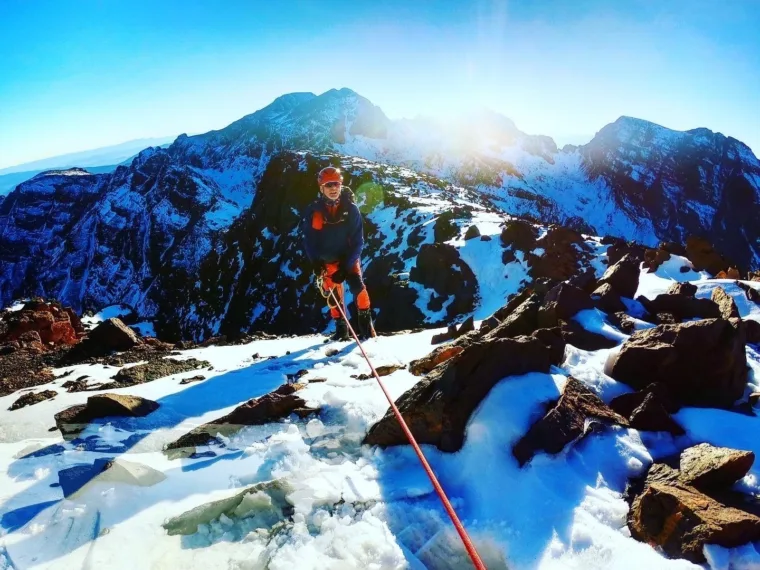
Climb Jebel Toubkal, 4,167m, with Joe Alexander as he prepares for Everest.
From £795
£159 deposit to reserve, payment plans available
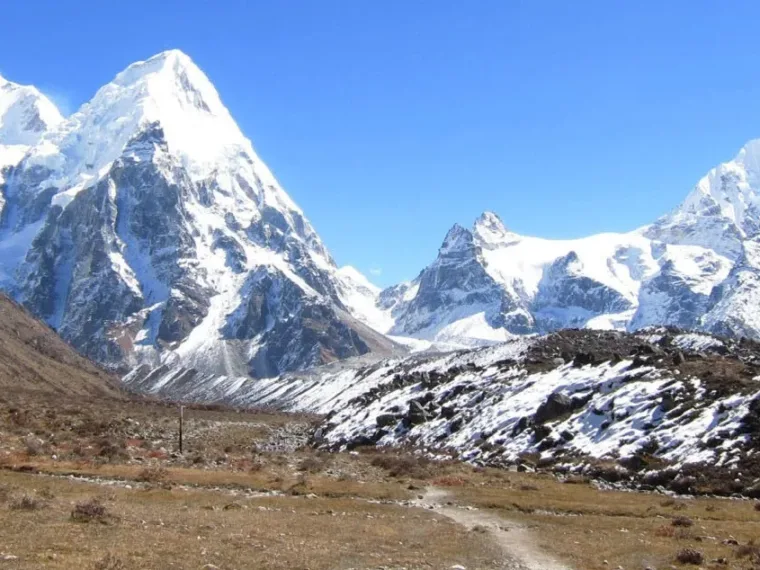
Sixteen days to the third highest mountain on earth, on a trail with nobody on it.
From £2,750
£550 deposit to reserve, payment plans available