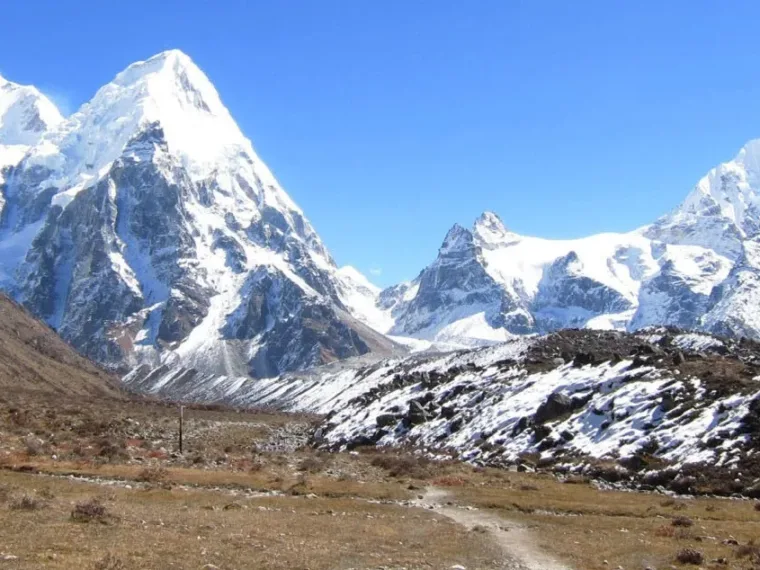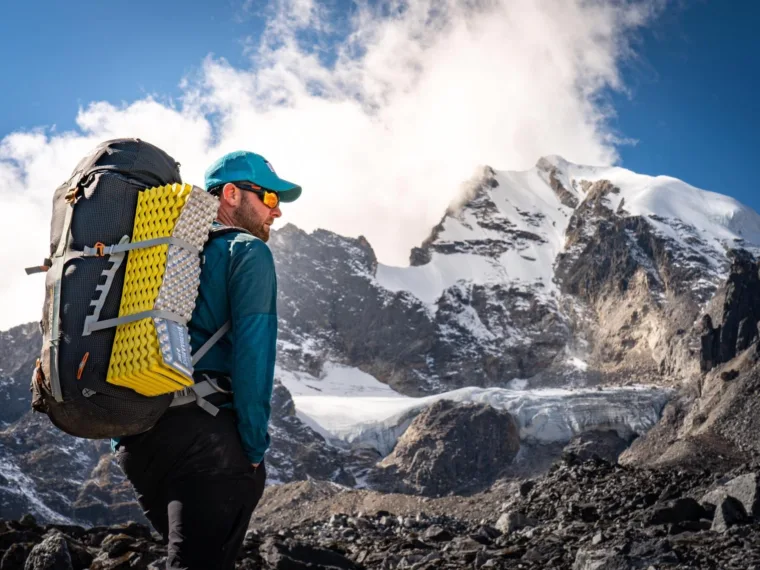

Silk Road Adventure: Uzbekistan
Three UNESCO cities by high speed train, mountain trails and a night in a yurt.
From £2,895
£579 deposit to reserve, payment plans available

Twelve days across Japan at the height of cherry blossom season, from the neon crossings of Tokyo to the temples of Kyoto, by way of Mount Fuji, a mountain ryokan and the wooden streets of Takayama.
There are few sights on earth as quietly overwhelming as Japan in blossom. For two or three weeks each spring the whole country turns pink and white, riverbanks become tunnels of sakura, temple roofs sit framed in petals, and half of Japan spreads a blue tarpaulin under the trees, opens a bento box and settles in to watch.
This is a small group journey built around that moment, and around everything else Japan does beautifully. We start in Tokyo, a city that manages to be futuristic and ancient in the same street. We ride the Shinkansen west to Hakone for hot springs and, on a clear morning, Fuji on the skyline. We walk in the Japanese Alps, wander the merchant streets of Takayama, and finish among the temples, bamboo and tea houses of Kyoto and Nara.
Ten guests, one expedition leader, twelve days. Not a coach tour and not a route march: a properly paced journey with time to sit under a tree and look up.
Welcome to Japan. You make your own way from the airport to our Tokyo hotel, where Joe and the rest of the group will be waiting. Most flights from the UK land in the afternoon, so there is usually time to shake off the journey before we meet.
Depending on arrival times we head out on foot for an easy orientation walk and our first meal together: an izakaya, a few small plates, a cold beer and a first go at chopsticks under the strip lights. Nothing strenuous. Get to bed early, because the jet lag will have you awake at five whether you like it or not.
A full day on foot and on the metro, cutting between the two Tokyos. We start at Meiji Shrine, where a gravel avenue runs under enormous torii gates into forest, and the noise of the city simply stops. Out the other side is Harajuku and then Shibuya, where the famous scramble crossing sends a thousand people across the road at once, four times a minute.
In the afternoon we cross the city to Asakusa and Sensoji, Tokyo's oldest temple, approached through a lane of stalls selling rice crackers and paper fans, then on to Ueno Park, which during blossom season becomes one long celebration under the trees.
Expect 15,000 to 20,000 steps and a lot of stairs in and out of stations. Comfortable shoes matter more today than they will on the mountain.
The one day we deliberately leave loose. Blossom does not read itineraries, so Joe decides the morning before, based on where the trees have actually opened.
The shortlist: the boat moat at Chidorigafuchi, where the branches hang so low over the water that the rowing boats disappear beneath them; Shinjuku Gyoen, a former imperial garden with dozens of varieties that flower in sequence, so something is always out; the Sumida River path with the tower behind it; and Yoyogi Park, which on a Sunday is the whole of Tokyo at play.
The evening is yours. Ask Joe where to eat and be prepared to sit at a counter with six seats and no English menu, which is usually where the best meal of the trip happens.
We leave Tokyo by Shinkansen, which is worth the fare for the experience alone: a platform marked to the centimetre, a train that arrives silently and leaves ninety seconds later, and a cleaning crew that turns the whole thing round in seven minutes.
Hakone is a caldera of pine covered ridges and sulphur vents an hour or so south. We take the ropeway up over Owakudani, where steam pours out of the hillside and they boil eggs black in the springs, then drop to Lake Ashi with its red torii gate standing in the water. On a clear afternoon Fuji sits directly behind it.
Tonight is a traditional ryokan: tatami matting, futons laid out while you are at dinner, a yukata to wear to the table, and a kaiseki meal of many small, precise courses. Before bed, the onsen. Joe will run through the etiquette, which is simple once explained and worth getting right.
North to the lakes that sit at Fuji's feet. The set piece is the Chureito Pagoda above Fujiyoshida, reached by just under 400 steps through a hillside of cherry trees. From the platform at the top you get the photograph that sells Japan: pagoda on the left, blossom across the frame, and the whole white cone of Fuji filling the sky behind. On a clouded day you get the pagoda, the blossom and a rumour of a mountain, which is simply how it goes.
The rest of the day is spent around Kawaguchiko, walking the northern lake shore where the cherry avenue runs right down to the water, with time for coffee, a hot spring footbath and a lot of standing still looking at things.
Be aware that the lakes sit higher and colder than Tokyo, so their blossom usually runs a week or two later than the capital's.
A travelling day, and a good one. We ride the Shinkansen north before changing to the limited express that threads up the Hida valley, a slow, beautiful line that follows the river through gorges and tunnels and small terraced villages with the mountains closing in on both sides. Bring a bento from the station: eating on a long distance train is entirely proper, and half the pleasure.
We arrive in Takayama in the late afternoon with time to walk into the old town before dinner, when the day visitors have gone and the lanterns come on outside the sake breweries. Up here spring arrives late, so you may find the blossom only just breaking while Tokyo's has already gone over.
Takayama's morning market runs along the riverbank from first light: pickles, miso, apples, hand carved bowls and cups of hot tea handed over by women who have been standing at the same stall for forty years. We go early, when it belongs to the town rather than to visitors.
Afterwards we walk the Sanmachi merchant district, three lanes of black timber townhouses with latticed fronts and low doorways, built by the merchants who grew rich on Hida timber and left alone by the twentieth century. Several are open to walk through, and the sake breweries hang a cedar ball above the door when the new batch is ready.
The afternoon is flexible: a craft workshop, the folk village on the hill, or simply a slow wander with a coffee and a Hida beef skewer. This is one of the gentler days, and after Tokyo it is a relief.
Our mountain day, spent walking a high valley in the Northern Japan Alps. The classic is Kamikochi, a flat bottomed glacial valley at around 1,500m where the Azusa river runs so clear over white gravel that the trout hang in it like they are suspended in air, with birch and larch along the banks and the Hotaka peaks standing over the whole thing still carrying winter snow.
The walking is easy to moderate and mostly level, on good paths and boardwalks, with suspension bridges over the river and the option to go further up the valley or turn back early. Five to six hours at a gentle pace, with a packed lunch on the riverbank.
One honest note: the valley road normally opens for the season in the second half of April, so on earlier departures we walk an alternative alpine valley in the same range instead. Your leader will confirm the plan before we leave Takayama, and it is a magnificent day either way.
We come down from the Alps by train and cross to Kyoto, arriving in time for the afternoon. Eleven hundred years of capital city, spared the bombing, dense with temples, and still built around low wooden houses, narrow lanes and small courtyard gardens you only glimpse through an open door.
We start gently in the old districts: teahouses along the Shirakawa canal, willows over the water, lanterns lit at dusk, and the very real possibility of seeing a geiko or a maiko walking to an appointment. We keep a respectful distance and put the phones down.
Dinner is your own tonight, and Kyoto is a fine place to be let loose with a recommendation and a map.
An early start, and worth every minute of lost sleep. We are at Fushimi Inari not long after first light, walking up through the vermilion torii gates while the hillside is still empty and the only sound is crows and your own footsteps. Thousands of gates, each paid for by a business, wind up the mountain: we go far enough to leave the crowds behind.
Across the city to Arashiyama for the bamboo grove, where the stems creak and knock against each other in the wind, then to the temples above it.
In the afternoon we walk the Philosopher's Path, a canal side lane under an unbroken avenue of cherry trees, named for the professor who walked it daily to think. In blossom, with petals on the water, it is as good as this trip gets.
A short train ride south to Nara, capital before Kyoto was, and home to Todaiji, an enormous timber hall containing a bronze Buddha of fifteen metres cast in the eighth century. It is one of those buildings that resets your sense of scale.
The temples sit inside a deer park, and the deer are the other reason people come. Twelve hundred of them wander freely, they are considered messengers of the gods, and they have learned to bow for a biscuit. They are also wild animals with hard heads and no manners, so hold the crackers high and hand them over promptly.
Back to Kyoto in the late afternoon, with an hour to pack and change before our farewell dinner: a proper meal together, a drink raised, and the strange business of saying goodbye to people you met eleven days ago.
Breakfast together, and then goodbyes. Kansai International is around ninety minutes from central Kyoto by the airport express, and your leader will have made sure everyone knows their train, their platform and their timings the night before.
Plenty of guests choose to stay on. Hiroshima and Miyajima are two hours west, Osaka is on the doorstep, and Tokyo is a couple of hours back up the line if you want a last day in the city. Tell us when you book and we will help you plan the extension.
It is graded Medium, the second of our four grades. That is 12 days of it, so being ready matters more than being fast. If you are unsure whether it suits you, talk to us before you book rather than after: we would far rather move you to the right adventure than watch you struggle on the wrong one.
Every trip runs with qualified leaders, a risk assessment written for the route, emergency procedures and communications planned before departure, and local support on the ground. Travel insurance covering your chosen activities is a condition of booking.
Your passport must be valid for the duration of your stay in Japan. Many nationalities, including British citizens, may enter Japan for short stay tourism without a visa, but entry rules change and it is your responsibility to check the current requirement for your own passport with the Japanese embassy or your government's travel advice before you book flights. Japan operates electronic immigration and customs declarations, which can usually be completed online in advance and will save you queuing on arrival.
The currency is the Japanese yen. Cards are widely accepted in cities, hotels and chain shops, but Japan remains far more cash dependent than most European countries: shrines, small family restaurants, market stalls, rural buses and coin lockers may all be cash only. Carry a working float of notes and top up at convenience store or post office cash machines, which reliably accept foreign cards where bank machines sometimes do not. Tipping is not customary anywhere in Japan and can cause embarrassment, so please do not.
International flights are not included. We start in Tokyo and finish in the Kyoto and Osaka region, so the most efficient booking is usually a multi city ticket flying into Tokyo, either Haneda or Narita, and out of Kansai International near Osaka. Direct flights from London to Tokyo take around fourteen hours. Please add your flight details to your guest portal once booked so we can plan your arrival, and tell us early if you would like to extend at either end.
This is a train based trip and your luggage lives with you. Bring one medium case you can lift unaided onto a rack and up a flight of station stairs, plus a daypack. Oversized cases must be reserved in advance on some Shinkansen services and are a genuine nuisance in small hotel rooms. Japan's excellent takkyubin service can forward a bag between hotels for a modest fee if you want to travel light through the mountains, and your leader will explain how it works.
Spring in Japan is mild and changeable. Expect roughly 12 to 22 degrees Celsius in Tokyo and Kyoto by day, cooler at night, with a real chance of rain at any point. The mountains are a different proposition: Takayama sits higher and colder, and the alpine valley at around 1,500 metres can be close to freezing in the morning shade with snow still lying on the peaks. Pack layers and genuine waterproofs rather than one thick coat.
Blossom is a natural event and nobody can guarantee it. The bloom moves north and uphill through spring, and the peak in any one place lasts roughly a week, shifting by up to two weeks year to year with the weather. Our route is deliberately designed to improve your odds: it spans Tokyo, the lakes, the mountains and Kyoto, which bloom at different times, and one Tokyo day is left flexible so we can go wherever the trees are actually out. Come for Japan in spring and treat a perfect bloom as the bonus it is.
No vaccinations are required for entry to Japan, though it is sensible to be up to date with routine immunisations including tetanus. Japanese healthcare is excellent but private and expensive for visitors, which is why insurance is compulsory on this trip. Tap water is safe to drink throughout. One thing that surprises people: Japanese cedar and cypress pollen peak in spring, so if you suffer from hay fever, bring your usual remedies with you.
Comprehensive travel insurance is a condition of joining this expedition and please upload your policy number and your insurer's 24 hour emergency number to your guest portal before departure. Please make sure your cover includes medical treatment and repatriation, cancellation and curtailment, baggage, and hill walking on marked paths up to 2,000 metres. Declare any pre existing medical conditions to your insurer honestly, as an undeclared condition can void a policy at the worst possible moment.
Eating is one of the great pleasures of this trip and we build in plenty of freedom to explore. Please add any dietary requirements to your guest portal well before departure rather than mentioning them on arrival: vegetarian and vegan requests in particular need arranging well in advance, as Japanese stock is very often made with fish, and set kaiseki menus at the ryokan are prepared to order. Serious allergies must also be recorded in your guest portal so we can brief every property in advance.
Japan runs on quiet good manners and they are easy to learn. Shoes come off at ryokan, temples and many restaurants, so slip on shoes are a real advantage. Trains are for silence, not phone calls. Onsen bathing is unclothed, separated by sex, and you wash thoroughly before entering the water: your leader will brief you properly beforehand, and some properties still restrict visible tattoos, so add a note to your guest portal in advance and we will sort it. For data, arrange an eSIM or pocket wifi before you travel.
Secure your place with a deposit today, then spread the balance interest free. How payment plans work
Not sure yet?
Talk it through with someone who has been there. Call 0191 903 9936 or send us a question.
| Dates | Availability | Price | Book |
|---|---|---|---|
| 1 - 12 April 2029 | Places available10 places left | £4,495 | Book this date |
Three UNESCO cities by high speed train, mountain trails and a night in a yurt.
From £2,895
£579 deposit to reserve, payment plans available
Sixteen days to the third highest mountain on earth, on a trail with nobody on it.
From £2,750
£550 deposit to reserve, payment plans available
A night camped at Everest Base Camp, in the year Joe Alexander climbs Everest.
From £2,500
£500 deposit to reserve, payment plans available