Kanchenjunga South Base Camp Trek
Sixteen days to the third highest mountain on earth, on a trail with nobody on it.
From £2,750
£550 deposit to reserve, payment plans available

Fifteen days through the Khumbu to Everest Base Camp at 5,364m and Kala Patthar at approximately 5,545m, led personally by Joe Alexander alongside Sujan and our Nepalese mountain team, with two dedicated acclimatisation days, expedition medical capability and 24 hour operational support from Kathmandu.
Everest Base Camp is one of the great walks of the world. It is also one of the most heavily sold trips in adventure travel. Search online and you will find hundreds of companies offering the same route, most of them competing to be a little cheaper than the company next to them. We are not trying to win that race, because cheap and value for money are not the same thing.
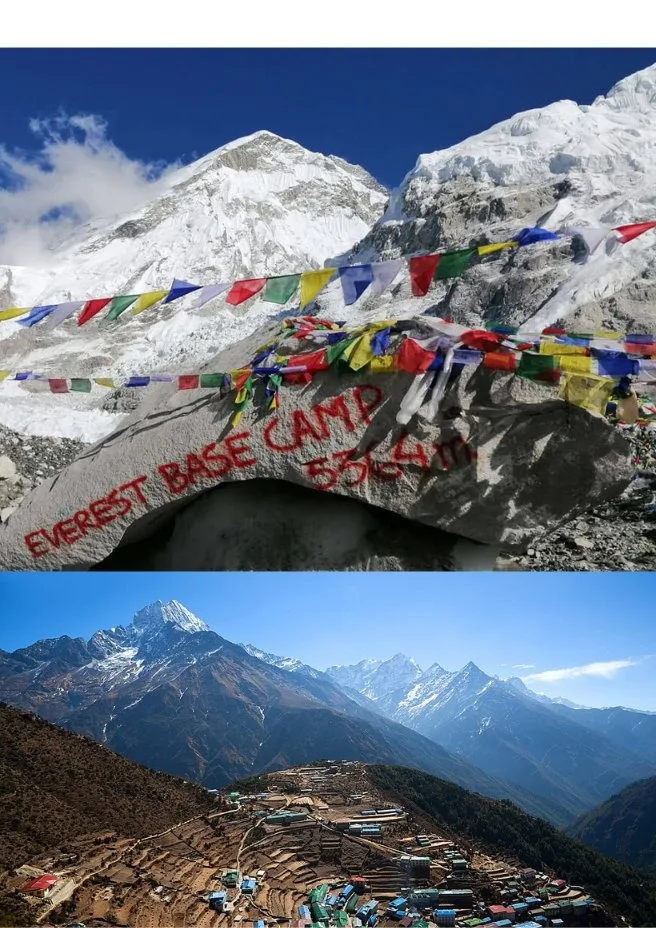
We want to give you considerably more than a flight to Lukla, a bed in a tea house and somebody pointing you in the right direction. Fifteen days from Kathmandu into the Khumbu and back: rhododendron forest and Sherpa villages, suspension bridges strung high above the Dudh Koshi, the long climb to Namche Bazaar, the monastery at Tengboche, the memorials on the ridge above Thukla, and finally the glacial moraine out to Everest Base Camp at 5,364m beneath the Khumbu Icefall.
This expedition is personally led by Joe Alexander alongside Sujan and our experienced Nepalese mountain team, with 24 hour operational support available from Kathmandu. By the time we walk in, Joe will be in his twenty fifth year of working with teams in the Nepal Himalaya, and will have climbed above Base Camp himself on the BTS27 expedition to Everest and Lhotse. When Everest first appears between the mountains, you will hear the story behind the climb. When we stand beneath the Icefall, he can point upwards and tell you where his own journey continued.
And we are not racing you to Base Camp. Two dedicated acclimatisation days, sensible pacing, honest conversations about how everyone is feeling, and a team whose job is to get you there with enough left in you to look around when you arrive.
Welcome to Nepal. You are met at Tribhuvan International Airport and transferred to our hotel in the centre of Kathmandu, a short walk from the restaurants, shops and equipment stores of Thamel and close enough to the old city that you can feel it from the doorstep.
Today is deliberately relaxed. Most guests arrive off a long international journey, often overnight, and the single most useful thing you can do on your first day in Nepal is nothing in particular. Sleep, shower, drink water, wander if you have the energy, and let the noise and colour of Kathmandu do their work.
In the evening we hold our first expedition welcome. You will meet Joe and the rest of the team, we will run through the shape of the fifteen days ahead, and we will talk honestly about altitude, pacing and how we operate as a group. Dinner in Kathmandu is your own tonight, and the leader will happily point you at somewhere good.
A proper preparation day, and one of the reasons our itinerary is fifteen days rather than twelve. This morning we complete final equipment checks together, item by item, against the kit list you were sent months ago. Anything missing can be bought or hired in Kathmandu, which is one of the best places in the world to do it, and far better done today than discovered at 4,000m.
You will meet members of our Nepalese team, and Joe will run the full expedition briefing: altitude and how we manage it, pacing, hydration, appetite and sleep, expedition health, communication within the group, what happens if somebody is struggling, and how decisions are made when conditions change.
The rest of the day is yours. Kathmandu rewards wandering: the stupas, the temples, the tangle of Thamel, the smell of incense and diesel, and coffee in a courtyard while somebody sells you a prayer flag. Repack tonight into your trekking bag and your day pack, and leave everything you will not need in the hotel store.
An early start and one of the most talked about flights in aviation. The mountain flight to Lukla takes around thirty five minutes and delivers you onto a short, sloping runway at approximately 2,850m with the Himalaya filling every window on the way in. Flights operate on mountain weather and can be delayed or rerouted, which is normal here and built into how we plan.
On arrival we meet our porter team, sort and distribute loads, drink tea, and walk out of Lukla through the gate and into the Khumbu. The first afternoon is deliberately gentle: mostly downhill and undulating along the Dudh Koshi valley, past mani walls and prayer wheels, through Chheplung and Ghat to Phakding at roughly 2,610m. Three to four hours of easy walking to find your rhythm.
From today until we return to Kathmandu, breakfast, lunch and dinner are included. Tonight is your first in a tea house: simple rooms, a warm dining room, dal bhat, and the particular quiet that comes when the generator goes off.
Today the expedition starts to feel properly Himalayan. We follow the Dudh Koshi upstream, crossing and recrossing the river on suspension bridges strung with prayer flags, some of them a very long way above the water. At Monjo we enter Sagarmatha National Park, register at the checkpost, and the valley narrows and steepens.
After the confluence and the famous high bridge, the trail turns upward for the long climb to Namche Bazaar. It is a steady two to three hours of switchbacks through blue pine and rhododendron, and about halfway up, weather permitting, you will get your first glimpse of Everest between the shoulders of Nuptse and Lhotse. It is a good place to stop, and not only for the view.
Namche sits in a natural amphitheatre at approximately 3,440m and has been the trading and staging post of the Khumbu for generations. Bakeries, kit shops, an Irish bar, a Saturday market and a great many people who have been to places you have read about. Roughly six hours of walking with around 800m of ascent.
We are staying here, and that is deliberate. Acclimatisation is not achieved by resting, it is achieved by going up and coming back down, so this morning we walk above Namche and return to sleep at roughly the same altitude we slept at last night.
The route climbs to the Syangboche ridge and the Everest View viewpoint at around 3,880m, where, weather permitting, the whole cast appears at once: Everest with its plume, Lhotse, Nuptse and the extraordinary fluted spire of Ama Dablam. There is time for tea, photographs and a long look. On the way back we can visit the Sherpa villages of Khumjung and Khunde and the Sherpa Culture Museum, which puts the mountaineering history of this valley into its proper local context.
Three to four hours of walking, and the rest of the day is yours in Namche. Joe and Sujan will use the day to talk with everyone individually about how their body is adapting, what to expect higher up, and what to look out for in themselves and in each other.
One of the most beautiful days of the trek. We leave Namche on the balcony trail contouring high above the Dudh Koshi gorge, with Ama Dablam directly ahead and Everest, Lhotse and Nuptse over your shoulder for most of the morning. It is gentle, spectacular walking, and easy to spend more time looking than moving.
The trail then drops several hundred metres to the river at Phunki Tenga, where water driven prayer wheels turn beside the bridge and there is tea and a chance to eat before the work starts. From here it is a steady climb of roughly 600m through rhododendron and birch forest to Tengboche at approximately 3,867m.
Tengboche Monastery is the spiritual heart of the Khumbu and one of the most significant Buddhist monasteries in Nepal, rebuilt after fire and earthquake and still very much a working monastery. Where timings allow we attend a prayer ceremony. The setting, with Ama Dablam filling the skyline behind the courtyard, is one people remember for the rest of their lives. Around five to six hours of walking.
The landscape changes significantly today. We descend through the last of the forest to Deboche, cross the Imja Khola on a high bridge and climb to Pangboche at around 3,985m, the highest permanent village in the valley and home to the oldest monastery in the Khumbu, which is worth the short detour uphill.
Above Pangboche the trees give out and the country opens into something altogether more austere: dwarf juniper, scrub, stone walled fields, glacial moraine and enormous space, with Ama Dablam standing over the whole valley. We continue past Shomare and Orsho and turn up into the Imja valley to Dingboche at approximately 4,410m, a scatter of stone walled potato and barley fields where the wind funnels through in the afternoon.
Five to six hours of walking. You will notice the air today. Breathing is harder on the climbs, sleep may become lighter and appetite can drop off. All of that is normal, and all of it is exactly what we are watching.
Our second acclimatisation day, and the one that pays for itself over the next three days. We climb the ridge of Nangkartshang above the village, gaining several hundred metres at a very deliberate pace, and turn around at a height chosen by the leader on the day rather than by ambition. Depending on the group we typically reach somewhere between 4,800m and 5,000m.
The views from the ridge are enormous: Ama Dablam from an angle almost nobody photographs, Lhotse and its huge south face, Island Peak and the Imja valley running east towards Makalu. It is cold, windy and worth every step.
Then we come back down to Dingboche to sleep, which is the entire point. The afternoon is genuinely restful: eat, drink, read, sleep, wash something in a bowl, and let your body get on with the quiet work of making more red blood cells. Joe, Sujan and the team continue monitoring the whole group and will talk to each of you individually again today.
A short but significant day. We traverse above the valley to Dughla at the snout of the Khumbu Glacier, then climb the steep moraine slope known to everyone who walks this route simply as the Thukla hill. It is around 45 minutes of honest work at altitude and it is the hardest half hour of the trek so far.
At the top is the Thukla Pass, and the memorials. Dozens of stone chortens strung with prayer flags stand on the ridge, built for climbers and Sherpas who died on Everest and the surrounding mountains, among them names you will recognise. It is a powerful place, and we do not rush through it. There is time to walk among them, read, ask questions and understand something of the human cost behind the story of Himalayan mountaineering. Following BTS27, this section carries its own very personal stories for Joe.
From the pass the trail runs along the lateral moraine of the Khumbu Glacier to Lobuche at approximately 4,940m, a small cluster of lodges beneath Nuptse. Around five hours of walking, and the coldest night so far.
This is the day. We leave Lobuche early and follow the moraine of the Khumbu Glacier, a strange, rubble strewn, buckled landscape of ice under stone, to Gorak Shep at approximately 5,164m, the last settlement in the valley and a sandy flat that was once a glacial lake. We drop bags, eat, and continue.
The final push to Base Camp takes two to three hours across the glacier, with Nuptse enormous on the right and the ice groaning and cracking beneath the path. And then you arrive at Everest Base Camp at 5,364m, at the foot of the Khumbu Icefall, a frozen cataract of collapsed seracs pouring out of the Western Cwm. In the climbing season the moraine below it is a small city of tents.
This is where having Joe leading this expedition matters most. Standing beneath the Icefall he can show you where the trekking journey ends and the climbing journey begins: the route through the Icefall, up to Camp 1, into the Western Cwm, Camp 2, the Lhotse Face, and on towards Everest and Lhotse. Following BTS27 he can tell you what happened up there, the good days and the difficult ones. You hear the story standing in the place where it happened. Then we return to Gorak Shep for the night. Around eight hours in total.
Weather, conditions and the wellbeing of the team permitting, we start before first light for Kala Patthar. The climb from Gorak Shep takes two to three hours and gains around 400m up a steep, stony shoulder of Pumori. It is cold, the air is thin, and progress is measured in short steps and deliberate breathing.
At approximately 5,545m it is the highest planned point of our expedition, and it gives what Base Camp itself cannot: the full, unobstructed view of Everest, from the Khumbu Icefall to the summit pyramid, with Nuptse, Changtse and Pumori around it and the glacier winding away below. Sunrise here is one of the great views on earth, and if the group is better served by going later in the morning, we go later.
We come back down to Gorak Shep for breakfast, pack, and then begin the descent. Losing altitude feels extraordinary, and most people notice within the first hour that they can breathe, eat and talk again. We retrace the moraine past Lobuche and Thukla and drop into Pheriche at approximately 4,371m. A long day of seven to eight hours, and a very good night's sleep.
A long day, but a genuinely enjoyable one. We drop out of the high valley past Orsho and Shomare to Pangboche, cross back over the Imja Khola and climb briefly to Tengboche before the forest path down to Phunki Tenga.
Everything you climbed on the way in you now come down, and everything looks different in reverse. The tree line returns, then colour, then birdsong, then the smell of woodsmoke and juniper. Appetites come roaring back and the group tends to talk a great deal more than it did three days ago.
The final section is the balcony trail back to Namche, with a last look over your shoulder at Everest, Lhotse and Ama Dablam before the valley closes behind you. Around six to seven hours of walking, with a short sharp climb back up from the river to finish. Namche at 3,440m will feel almost tropical, and there is a hot shower, a bakery and a considerable sense of achievement waiting.
The last full day on the trail. We drop steeply out of Namche on the switchbacks that felt so long on the way up, cross the high bridge above the confluence, and follow the Dudh Koshi back down through Monjo and out of Sagarmatha National Park.
The walk from Phakding to Lukla is undulating and finishes with a final climb back up to the town, which everybody remembers as being flatter than it turns out to be. Six to seven hours in total, through villages that will now feel familiar and past people you may well recognise.
Tonight is the celebration. Fifteen days ago most of you had not met. Tonight you will sit down with Joe, Sujan, our Nepalese guides and the porter team who carried your kit across the Khumbu, and mark what the group has done together. Tips for the Nepalese team are traditionally presented tonight, and the leader will have briefed you on this in advance so nobody is put on the spot.
An early breakfast and, subject to mountain weather and flight operations, we fly out of Lukla and back to Kathmandu. Flights here run to the mountain rather than the timetable, so patience is part of the plan, and our Kathmandu team monitors the situation throughout.
We transfer back to our city centre hotel, where your stored luggage is waiting, and the first hot shower in two weeks is one of the great underrated experiences of adventure travel.
The rest of the day is yours. Sleep, eat something you have been thinking about for a week, walk through Thamel, buy the things you promised yourself, or simply sit in a courtyard and let it all settle. Most groups reconvene in the evening of their own accord, because by this point you are unlikely to want to eat alone.
Breakfast together for the last time, and the usual business of exchanging photographs, phone numbers and half remembered stories from a dining room at 4,940m.
Airport transfers are arranged around your international flights, and the team will see you through to the terminal. If you have a late flight there is time for a final walk, a last coffee and whatever shopping you failed to do yesterday.
You fly home having walked to the foot of Everest, stood beneath the Khumbu Icefall, watched the sun come up over the highest mountain on earth from Kala Patthar, and spent two weeks in the company of a Nepalese team whose mountains these are. It takes a while to properly land. Most people find they are already thinking about the next one before they have unpacked.
It is graded Hard, the third of our four grades. That is 15 days of it, so being ready matters more than being fast. The highest point is about 5,545m, so altitude is part of what makes it hard. If you are unsure whether it suits you, talk to us before you book rather than after: we would far rather move you to the right adventure than watch you struggle on the wrong one.
Every trip runs with qualified leaders, a risk assessment written for the route, emergency procedures and communications planned before departure, and local support on the ground. Travel insurance covering your chosen activities is a condition of booking.
Most nationalities can obtain a Nepalese tourist visa on arrival at Tribhuvan International Airport in Kathmandu, either at the electronic kiosks in the arrivals hall or at the visa desk, and there is also an option to apply online in advance. You will need a passport photograph and the fee, which is payable in cash and is easiest in major currency. Visas are issued for a set number of days and the length of our expedition means most guests take the shortest standard option, but check the current fee and duration before you travel. Your passport must have at least six months' validity beyond your return date and two or more blank pages. Rules can change, so please verify the current position for your own nationality, add your passport details to your guest portal early, particularly if you hold a passport other than a British one, so we can check it properly for you.
Comprehensive travel insurance is a condition of joining this expedition and we will ask to see it. Your policy must cover trekking to at least 6,000m, medical treatment, repatriation and helicopter evacuation. This is the single most important piece of paperwork on the trip. Many standard travel policies limit trekking cover to 4,000m or exclude mountain rescue entirely, which is useless on a route where the only realistic way out of the upper valley in an emergency is by helicopter. Read the wording rather than the summary, and if in doubt use a specialist provider. Please upload your policy number and your insurer's 24 hour emergency number to your guest portal before departure.
This is genuine high altitude trekking. Everest Base Camp sits at 5,364m, our highest planned point at Kala Patthar is approximately 5,545m, and we sleep at 5,164m at Gorak Shep. Everybody feels altitude to some degree: breathlessness on climbs, a lighter night's sleep, a reduced appetite and occasional mild headaches are normal. Acute mountain sickness is not, and it is what we watch for. Our itinerary includes two dedicated acclimatisation days, at Namche Bazaar and at Dingboche, both built around the climb high and sleep low principle. Joe monitors the group throughout alongside Sujan and the Nepalese leadership team, we talk openly and daily about how everyone is feeling, and decisions are made on the basis of the people in front of us rather than what the itinerary says. Descent is always available and is never treated as a failure. No leader, itinerary or piece of equipment removes the risks of altitude, but proper acclimatisation, honest reporting and sensible decisions manage them well.
See your GP or a travel clinic at least eight weeks before departure and tell them exactly where you are going and how high you are sleeping. Clinics commonly advise routine boosters including tetanus, along with hepatitis A and typhoid, and will discuss rabies for a remote itinerary. Malaria is not a concern on this route. Stomach upsets are the most common illness on any Himalayan trek, so we use purified or boiled water throughout, we ask guests to be strict about hand hygiene and hand sanitiser, and we advise sticking to hot, freshly cooked food. Dal bhat is served everywhere for a reason. If you take regular medication or have a cardiac, respiratory or metabolic condition, please discuss the expedition with your doctor and add it to your guest portal when you book.
Joe acts as expedition leader and medic, working alongside Sujan and our Nepalese leadership team, and a comprehensive expedition medical kit travels with us. We also carry an AED, an automated external defibrillator, all the way to Everest Base Camp. It adds weight and it adds logistics, and the ideal outcome is that it stays in its case for the whole expedition. We carry it because we are travelling through a remote mountain environment several days from conventional medical facilities and reaching altitudes above 5,000m, and we would rather carry emergency equipment and never need it than need it and wish we had brought it. Throughout the trek we monitor how everyone is responding to altitude and talk openly about headaches, hydration, appetite, sleep and fatigue. There is a Himalayan Rescue Association aid post at Pheriche and a clinic at Lukla, and helicopter evacuation to Kathmandu is the standard route out for a serious case, which is why insurance covering it is compulsory.
International flights are not included and you should book into and out of Kathmandu (KTM). There are no direct flights from the UK; common routings are via the Gulf, Delhi or Istanbul. The mountain flight between Kathmandu and Lukla is included. Lukla is one of the most weather dependent airfields in the world and delays, cancellations and same day reroutes are a normal part of Himalayan travel rather than an exception. In some seasons flights operate from Manthali rather than Kathmandu, which involves an early road transfer, and our Kathmandu team manages this. Please do not book an international flight home on the same day we are scheduled to fly out of Lukla. Our itinerary deliberately includes a night in Kathmandu afterwards, and we strongly recommend treating that as your buffer rather than your spare day.
In Kathmandu we stay in a comfortable hotel right in the city centre, on a twin or double room basis with en suite bathrooms, hot water and wifi, within walking distance of restaurants, shops and equipment stores. Breakfast is included there. A single room supplement is available in Kathmandu on request. Once we enter the Khumbu we stay in traditional Nepalese tea houses and lodges. These are not hotels and we are not going to pretend otherwise: expect a simple twin room with a bed, mattress and blanket, shared bathrooms, a heated communal dining room in the evening and unheated bedrooms. Facilities become progressively more basic and colder as we climb, and Gorak Shep is the most basic of all. Bring a four season sleeping bag. Single rooms cannot be guaranteed during the trekking section because of the nature and availability of tea house accommodation.
The arrangement is straightforward. In Kathmandu, breakfast is included and lunch and dinner are your own, which gives you the freedom to explore the city's restaurants. From the moment we leave Kathmandu until we return, breakfast, lunch and dinner are included every day: breakfast at the overnight tea house, lunch on the trail and dinner at the next lodge. Food is simple, hot and plentiful, with dal bhat, noodles, soups, potatoes, eggs, porridge and pasta as the staples, and the food improves the lower you are. Vegetarians are very well catered for. Please add vegan, gluten free and serious allergy requirements to your guest portal when you book and understand that choice narrows considerably at altitude. Personal snacks, additional drinks, bottled drinks and alcohol are not included. We do not use single use plastic bottles, so bring bottles and purification, and we advise no alcohol above Namche.
Our Nepalese porters are an essential part of the expedition team, and their work is what allows guests to walk without carrying full expedition luggage. You will trek carrying a day pack of 30 to 40 litres with water, layers, waterproofs, sun protection, camera and anything you need during the day, while the porter team moves your main trekking bag between overnight locations. That bag should be a soft duffel or holdall, within the weight allowance we will confirm before departure, and you will not have access to it during the walking day. Anything you do not need in the mountains stays in secure storage at our Kathmandu hotel. Porter welfare matters to us: our porters are insured, properly equipped and carry weights within agreed limits, and the load limit exists for their protection rather than as an inconvenience for you.
Spring in the Khumbu is one of the two main trekking seasons and generally brings settled weather, clear mornings and cloud building through the afternoon, with rhododendron in flower in the lower valley. Temperatures vary enormously with altitude and time of day. In the lower valley expect pleasant daytime walking temperatures, while at Lobuche and Gorak Shep daytime temperatures hover around freezing and overnight temperatures commonly fall well below it. The sun at altitude is fierce even when the air is cold, so high factor sun cream and category 4 sunglasses are essential rather than optional. Snow is possible on the higher sections at any time. Layering is the answer to all of it, and the kit list is built around it.
Nepal's currency is the Nepalese rupee. Cards work in Kathmandu hotels and larger shops but cash is essential everywhere else, and there are no cash machines above Namche Bazaar, so draw or change what you need before we fly to Lukla. On the trail you pay cash for hot showers, device charging, wifi, bottled drinks, snacks and souvenirs, and prices rise steadily with altitude for the obvious reason that everything is carried there. Tips for the Nepalese guides, porters and hotel staff are not included and are an established and genuinely appreciated part of the culture. Your leader will brief you on sensible amounts well in advance and will usually organise the team tip as a group on the final night in Lukla, so that nobody is put on the spot.
Kathmandu has good mobile coverage and reliable wifi. In the Khumbu, mobile signal is patchy and depends on network and location, and most tea houses sell wifi access by the day, which works reasonably well at Namche and gets progressively less reliable higher up. A local Nepalese SIM or the Everest Link wifi card are the usual solutions and your leader will help. Charging in tea houses is available for a fee, usually in the dining room rather than your bedroom, and it gets more expensive with altitude. Bring a large power bank, keep batteries inside your sleeping bag at night because cold flattens them, and accept that being partly offline for a week is one of the better features of the trip. The expedition carries satellite communications for emergency use.
You do not need to be a mountaineer. There is no technical climbing on the standard Everest Base Camp route and no ropes, crampons or ice axes are involved. But it is not easy. You will walk on eight to ten consecutive days, several of them six hours or more, with significant ascent and descent on rough stone trails, in basic mountain accommodation, in variable weather and at altitudes above 5,000m. You need a good level of general fitness, no significant untreated medical issues and a willingness to prepare properly, and we provide a training programme to help you arrive ready. You do not need to be the fastest person in the group. At altitude, being fast is not particularly useful. A positive attitude, sensible pacing and a willingness to work as part of a team matter far more.
The Khumbu supports a great many people and absorbs a great deal of pressure, and how we travel there matters. We employ Nepalese guides and porters directly, insure them, equip them and respect load limits. We stay in locally owned tea houses, buy locally and eat what is grown or carried in rather than demanding imported alternatives. We avoid single use plastic bottles entirely and purify or buy boiled water instead. We carry out what we carry in, including batteries, and we ask guests to do the same. We respect monasteries, mani walls, chortens and prayer wheels, passing them clockwise, and we ask before photographing people. Park and municipality entry fees, which are included in your expedition, go directly towards the management of Sagarmatha National Park and the local community.
You can find this route more cheaply. Hundreds of operators sell Everest Base Camp and many compete on price alone. We are not trying to win that race, because making a trip cheaper means taking things away: less support, less equipment, cheaper services, larger groups or fewer contingency systems. When you are comparing expeditions, and we would encourage you to compare, ask more than the headline number. Who will actually lead me, and can I communicate clearly with them? What experience do they have? What Nepalese team supports them? Are porters included and insured? Are meals, Lukla flights and permits included? How many acclimatisation days are there? What medical training does the leadership team have, and what medical equipment are they carrying? What happens if something goes wrong, and is there a support team away from the mountain? Those answers tell you far more about an expedition than a price does.
Secure your place with a deposit today, then spread the balance interest free. How payment plans work
Not sure yet?
Talk it through with someone who has been there. Call 0191 903 9936 or send us a question.
| Dates | Availability | Price | Book |
|---|---|---|---|
| 24 Apr - 8 May 2028 | Places available12 places left | £2,595 | Book this date |




Sixteen days to the third highest mountain on earth, on a trail with nobody on it.
From £2,750
£550 deposit to reserve, payment plans available
A night camped at Everest Base Camp, in the year Joe Alexander climbs Everest.
From £2,500
£500 deposit to reserve, payment plans available
Four days on the W, a daypack only, and a spare day held back for the wind.
From £2,900
£580 deposit to reserve, payment plans available